
【国画基本信息】
| 作者 | 吕纪 |
| 品名 | 荷渚睡凫图轴 |
| 朝代 | 明朝 |
| 文件大小 | 18.04MB |
| 分辨率 | 300x300 |
| 像素大小 | 1914x3143 |
| 尺寸(CM) | 16.2x26.61 |
| 作品数量 | 1 |
| 作品收藏 | 台北故宫博物院 |
| 图片格式 | 默认提供TIF和JPG两个版本 |
基本数据
| 藏品类型 | 绘画 |
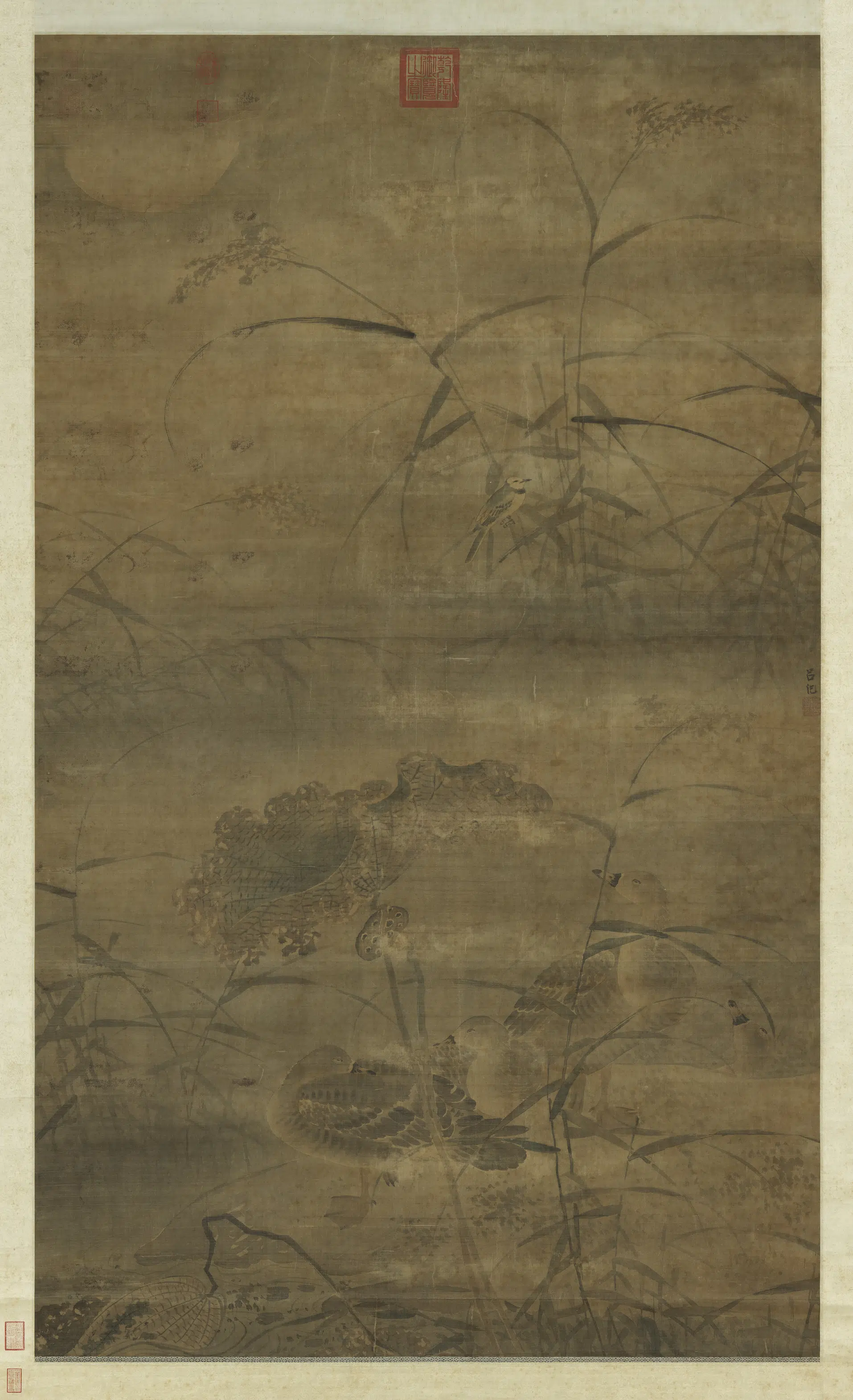
| 品名 | 明吕纪荷渚睡凫 轴 Ducks Sleeping Among Lotuses on a Sand Bar |
| 分类 | 绘画 |
| 作者 | 吕纪 |
| 数量 | 一轴 |
典藏尺寸
| 【位置】 | 【尺寸】(公分) |
| 本幅 | 174.5x104.2 |
质地
| 【质地位置】 | 【质地】 |
| 本幅 | 绢 |
题跋数据
| 【题跋类别】 | 【作者】 | 【位置】 | 【款识】 | 【书体】 | 【全文】 |
| 作者款识 | 吕纪 | 本幅 | 吕纪 | 行楷书 | |
| 印记: 四明吕廷振印 | |||||
| 【印记类别】 | 【印记】 |
| 鉴藏宝玺 | 乾隆御览之宝 |
| 鉴藏宝玺 | 宣统御览之宝 |
| 鉴藏宝玺 | 嘉庆御览之宝 |
| 鉴藏宝玺 | 养心殿鉴藏宝 |
| 鉴藏宝玺 | 石渠宝笈 |
主题
| 【主题类别】 | 【主题(第一层)】 | 【主题(第二层)】 | 【主题说明】 |
| 主要主题 | 山水 | 夜景(月景) | |
| 次要主题 | 花草 | 莲荷 | 叶、莲蓬 |
| 次要主题 | 花草 | 芦苇 | |
| 主要主题 | 翎毛 | 鸭.凫 | 凫四只 |
| 次要主题 | 翎毛 | 鹡鸰 | |
| 次要主题 | 山水 | 溪涧、湍泉 |
技法
| 【技法】 | 【技法细目】 |
| 写意 | |
| 没骨 |
参考数据
| 【类别】 | 【参考数据】 |
| 收藏着录 | 石渠宝笈初编(养心殿),上册,页661 |
| 收藏着录 | 故宫书画录(卷八),第四册,页78 |
| 收藏着录 | 故宫书画图录,第七册,页207-208 |
| 内容简介(中文) | 月夜时分,岚雾凄迷,芦苇、荷叶隐现其间,洲渚上栖息大雁四只。构图上只有近、中景,远景则多省略不绘。本幅虽有吕纪名款,然有存疑之处,且通幅之笔力较为薄弱,当非吕氏之原迹。但其景物布置与气氛营造与另一张本院收藏吕纪「秋渚水禽」颇为接近,故此应为一相当忠实于吕氏风格之仿作,可从此画中一窥吕纪写意风格的面貌。 吕纪(活动于公元一四三九-一五0五年间),浙江宁波人。字廷振,号乐愚,亦作乐渔。吕纪为明代中叶著名的宫廷花鸟画家,孝宗弘治(公元一四八八-一五0五年)间值仁智殿,官至锦衣卫指挥。花鸟初学边文进(活动于一四0三-一四二八),后摹仿唐宋诸名家,结合工笔、写意法,呈现出多种面貌,颇具个人特色 |
| 内容简介(英文) | On a moonlit night in thick fog, four geese rest on a sand bar amidst lotuses and rushes. The composition only includes the foreground and middleground, and the background has been omitted. This work bears the signature of Lu Chi, but the authenticity is in question due to the weakness of the brushwork, which does not match that of his other paintings. The position of each part and the atmosphere here is similar to those in another work by Lu in the Museum entitled “Waterfowl on an Autumn Islet”. Thus, the painting here probably reflects a faithful imitation of Lu’s style, which nonetheless provides a glimpse of his “sketching ideas” manner. Lu Chi, a native of Chekiang, initially studied the bird-and-flower style of the early Ming painter Pien Wen-chin (fl. 1403-1428). He later followed the manners of the old masters, eventually becoming a master in his own right. By combining the fine-line and “sketching ideas” techniques, he was able to create a multifaceted style all his own. In the Hung-chih era (1488-1505), Lu |
