
【国画基本信息】
| 作者 | 吕纪 |
| 品名 | 秋渚水禽图轴 |
| 朝代 | 明朝 |
| 文件大小 | 18.0MB |
| 分辨率 | 300x300 |
| 像素大小 | 1930x3110 |
| 尺寸(CM) | 16.34x26.33 |
| 作品数量 | 1 |
| 作品收藏 | 台北故宫博物院 |
| 图片格式 | 默认提供TIF和JPG两个版本 |
基本数据
| 藏品类型 | 绘画 |
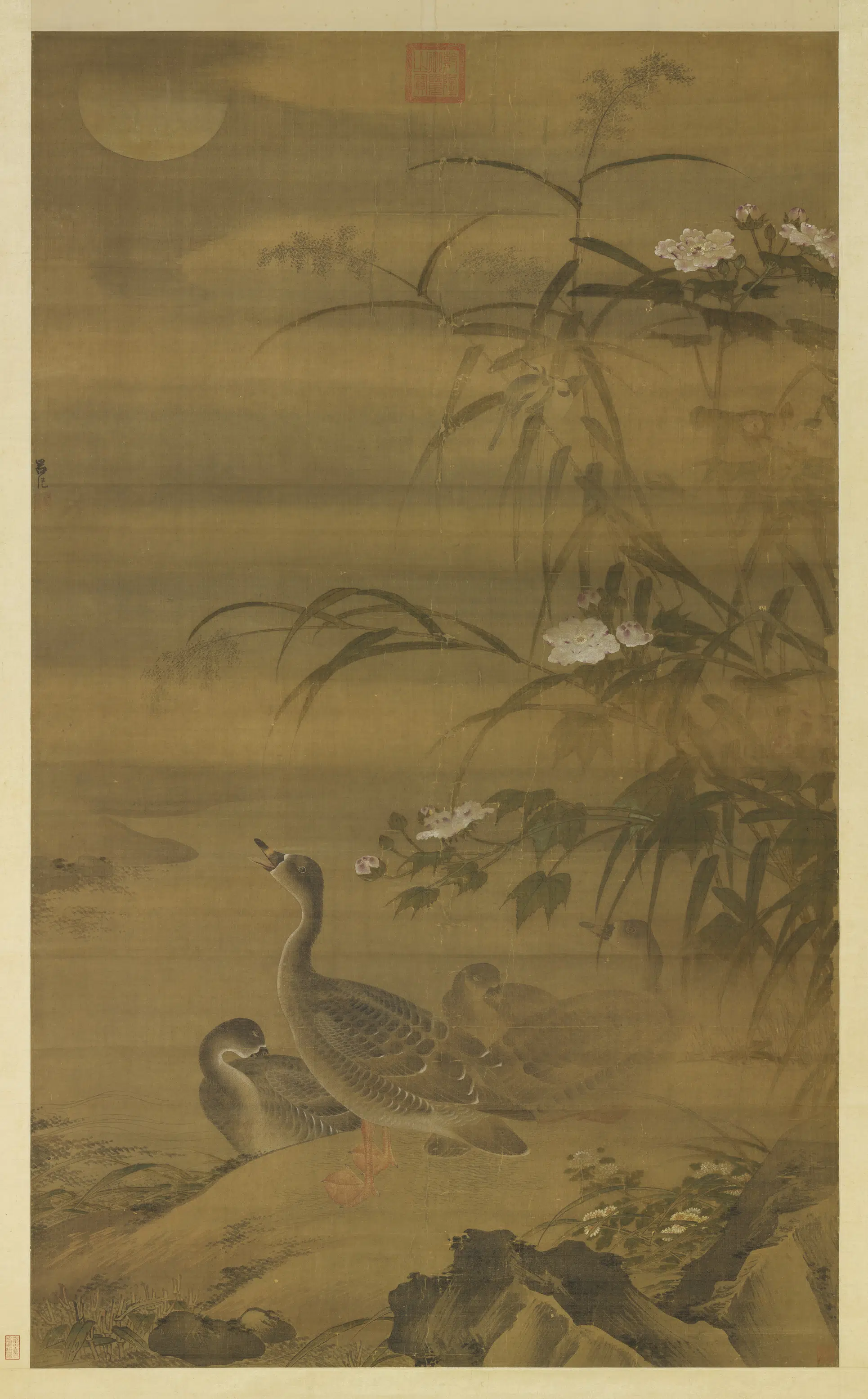
| 品名 | 明吕纪秋渚水禽 轴 Waterfowl Among Autumn Shoals |
| 分类 | 绘画 |
| 作者 | 吕纪;Lu Ji |
| 数量 | 一轴 |
典藏尺寸
| 【位置】 | 【尺寸】(公分) |
| 本幅 | 177.2x107.3 |
质地
| 【质地位置】 | 【质地】 |
| 本幅 | 绢 |
题跋数据
| 【题跋类别】 | 【作者】 | 【位置】 | 【款识】 | 【书体】 | 【全文】 |
| 作者款识 | 吕纪 | 本幅 | 吕纪 | 行书 | |
| 印记: 四明吕廷振印 | |||||
| 【印记类别】 | 【印记】 |
| 鉴藏宝玺 | 乾隆御览之宝 |
主题
| 【主题类别】 | 【主题(第一层)】 | 【主题(第二层)】 | 【主题说明】 |
| 其他主题 | 山水 | 秋景 | |
| 次要主题 | 翎毛 | 鹡鸰 | 2只 |
| 主要主题 | 翎毛 | 雁 | 4只 |
| 次要主题 | 花草 | 菊 | |
| 主要主题 | 花草 | 芙蓉 | |
| 其他主题 | 花草 | 芦苇 | |
| 其他主题 | 山水 | 夜景(月景) | |
| 次要主题 | 山水 | 溪涧、湍泉 | |
| 其他主题 | 花草 |
技法
| 【技法】 | 【技法细目】 |
| 工笔 | |
| 写意 | |
| 皴法 | 斧劈皴 |
参考数据
| 【类别】 | 【参考数据】 |
| 收藏着录 | 故宫书画录(卷五),第三册,页333 |
| 收藏着录 | 盛京故宫书画录,第五册,页18a |
| 收藏着录 | 故宫书画图录,第七册,页177-178 |
| 内容简介(中文) | 吕纪,(活动于公元1429-1505年间),浙江鄞县(今宁波)人。字廷振,号乐愚,一作乐渔。弘治(1488-1505)间值仁智殿,官至锦衣指挥。花鸟初学边文进(活动于1403-1428),后摹唐宋诸名家笔,而更精妙。 烟岚迷漫的秋夜里,明月半悬,四只豆雁栖息在半隐半现的木芙蓉和芦苇丛间的坡地上,其中三只已入眠,另一只则正对着明月引颈长鸣。但作者所要呈现的应不只是雁群在夜间栖息时,会由一雁警戒守夜的习性而已,还有一份对时、对景抒发情怀的心境,进而画出了秋夜的凄清。幅中画鸟画花的笔墨,工整细致而不刻板,画石则较写意,这种结合工写,又能掌握住情境气氛的作品,正是吕纪所擅长的绘画风格,并对后世画家有极大的影响。(谭怡令) |
| 内容简介(英文) | Lu Chi (style name T’ing-chen, sobriquet Yao-yu) was a native of Ning-po, Chekiang province. During the Hung-chih period (1488-1505), he served in the Jen-chih Hall and held the rank of commander in the Imperial Bodyguard, a military unit that also provided sinecures for court painters. In bird-and-flower painting, he initially studied the works of Pien Wen-chin and later emulated the paintings of famous T’ang (618-907) and Sung (960-1279) dynasty artists. The original title of this painting was Geese among Reeds and Hibiscus. In this painting, four geese gather into a group to sleep. A gander standing on the bank stretches his neck toward the moon and cries out an alarm. The pair of wagtails perched on a branch represent an interesting, additional decorative element in the composition. The artist has succeeded in portraying a misty scene evocative of a peaceful autumn night. The combination of meticulous brushwork (kung-pi) with expressive ideas (hsieh-i) and the use of outl |
