
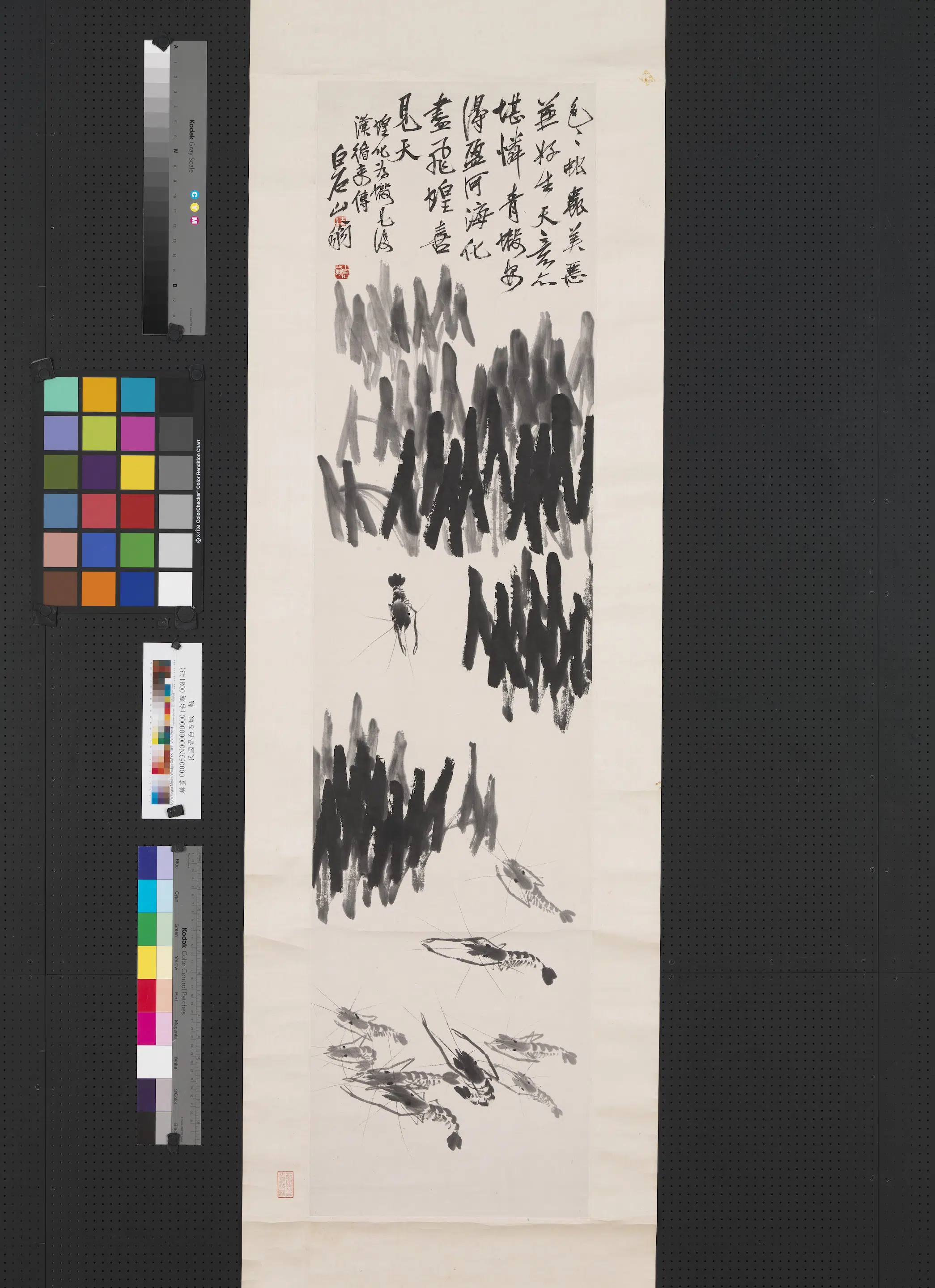
【国画基本信息】
| 作者 | 齐白石 |
| 品名 | 虾图轴 |
| 朝代 | 近现代 |
| 文件大小 | 18.04MB |
| 分辨率 | 300x300 |
| 像素大小 | 2090x2878 |
| 尺寸(CM) | 17.69x24.36 |
| 作品数量 | 1 |
| 作品收藏 | 台北故宫博物院 |
| 图片格式 | 默认提供TIF和JPG两个版本 |
基本数据
| 藏品类型 | 绘画 |
| 品名 | 民国齐白石虾 轴 Shrimp |
| 分类 | 绘画 |
| 作者 | 齐白石 |
| 数量 | 一轴 |
典藏尺寸
| 【位置】 | 【尺寸】(公分) |
| 本幅 | 135.7x33.8 |
| 全幅 | 49.6 |
质地
| 【质地位置】 | 【质地】 |
| 本幅 | 纸本 |
题跋数据
| 【题跋类别】 | 【作者】 | 【位置】 | 【款识】 | 【书体】 | 【全文】 |
| 作者款识 | 齐白石 | 本幅 | 色色蛇虫美恶并。好生天意亦堪怜。青虾安得盈河海。化尽飞蝗喜见天。蝗化为虾。见后汉循吏传。白石山翁。 | 行书 | |
| 印记: 木居士、白石翁 | |||||
| 【印记类别】 | 【印记】 |
主题
| 【主题类别】 | 【主题(第一层)】 | 【主题(第二层)】 | 【主题说明】 |
| 主要主题 | 水中动植物 | 虾 | |
| 次要主题 | 花草 | 慈菇 |
技法
| 【技法】 | 【技法细目】 |
| 写意 | |
| 没骨 |
参考数据
| 【类别】 | 【参考数据】 |
| 内容简介(中文) | 齐白石(公元一八六四-一九五七年),湖南湘谭人。原名璜,字萍生,号白石。画善山水、人物、花卉草虫,又精书法、篆刻。其中,尤以虾、蟹等水族题材最多,笔致淋漓活泼,构图新颖,诚已超迈古人。 本幅以朴拙之笔,画慈菇三五成丛,草虾悠游其间。款题云:色色虾虫美恶兼,好生天意亦堪怜;青虾安得盈河海,化尽飞蝗喜见天。蝗化为虾,见后汉循吏传。白石山翁。钤印:木居士,白石翁。 |
| 内容简介(英文) | Ch’I Pai-shih (original name Huang, style name P’ing-sheng, and sobriquet Pai-shih) was a native of Hsiang-t’an,Hunan. He excelled at painting landscapes, figures, and flowers-and-insects, and he was also a gifted calligrapher and sealcarver. Among his depictions of waterlife, shrimp and crabs are the most numerous subjects. He often painted with water-laden ink and lively brushwork, creating innovative compositions as he surpassed those of the ancients. Using slightly awkward brushwork in this painting, Ch’I Pai-shih has depicted several clumps of arrowhead plants as grass shrimp leisurely swim about. Ch’I also calligraphed the poem about shrimp in seven characters on this painting. |
| 内容简介(中文) | 齐璜(公元一八六四-一九五七年),湖南湘潭人。小名阿芝,字萍生,号白石,又号寄萍、借山翁等,名号甚多。年少学木工,善雕花。二十七岁学书画,学诗文,篆刻。四十岁后游历大江南北,六十岁后定居北平,以刻印卖画为生,并任北京艺专教授。其书画以徐渭、八大、石涛为宗,兼及金农、吴昌硕。 白石善以朴拙写意之笔法,处理日常生活可见之事物。此幅以古拙的笔墨写三五成丛之慈菇、草虾悠游其间。墨虾生动活泼,而构图别出新裁,极富新颖之感。 |
| 内容简介(英文) | Ch’I Pai-shih was a native of Hsiang-t’an, Hunan, and known by many sobriquets throughout his life. As a youth he studied carpentry and excelled at decorative carving. At twenty-six he studied painting and calligraphy, as well as poetry, prose, and seal carving. At forty he began travelling all over China, finally settling down in Peking at fifty-nine. He made a living by carving seals and selling paintings, and he also served as a professor at the Peking Art Academy. The styles of his painting and calligraphy followed those of Hsu Wei (1521-1593), Chu Ta (1626-1705), Shih T’ao (1642-c. 1707), as well as Chin Nung (1687-1763), and Wu Ch’ang-shih (1844-1928). Chi excelled at using simple brushwork to depict objects from daily life. In theis work he has used an antique flavor to paint clusters of fungi with shrimp swimming among them. The monochrome shrimp are lively, and the composition of the painting is freshly original. |
