
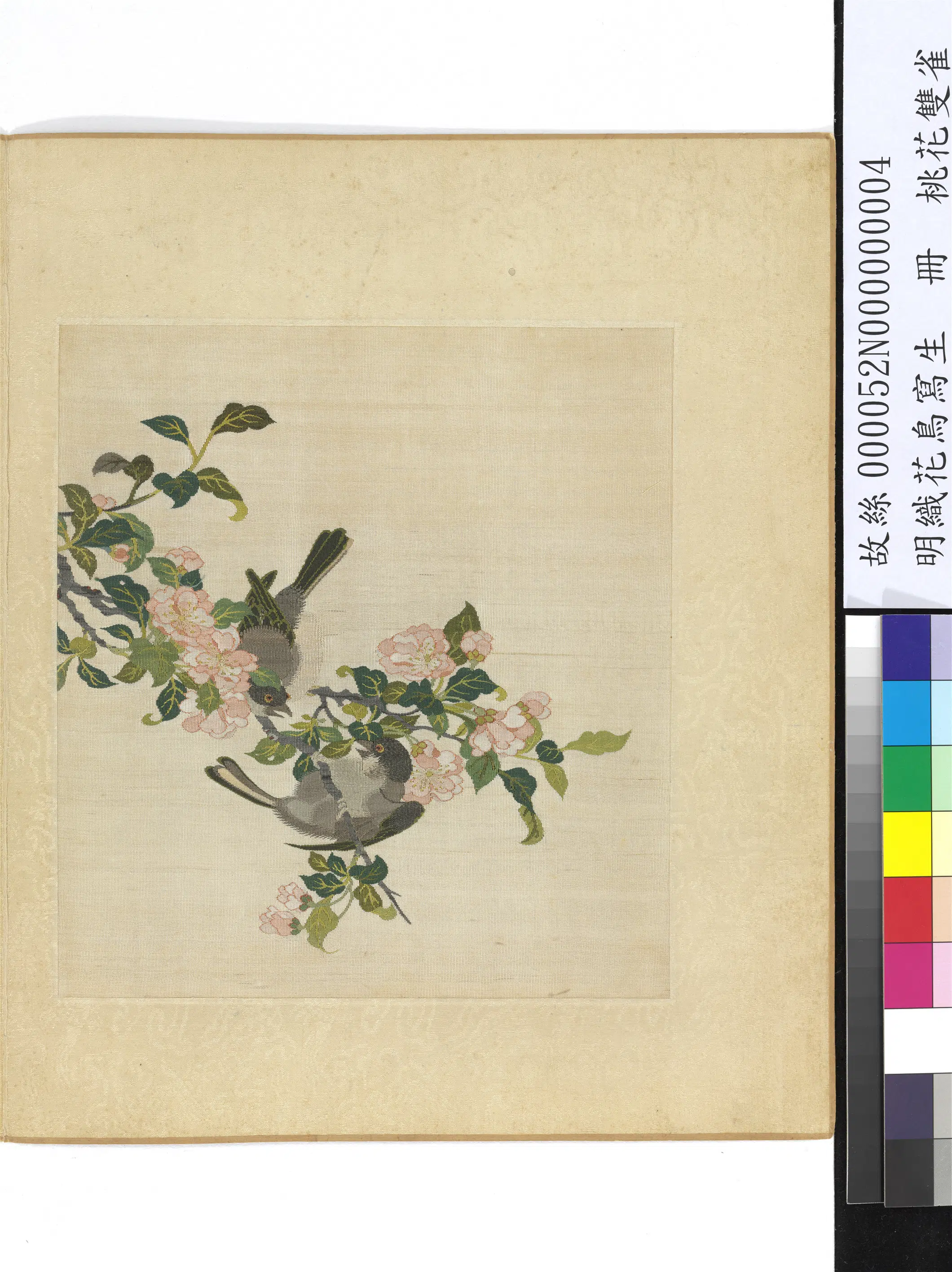
【国画基本信息】
| 品名 | 明织花鸟写生册-桃花双雀 |
| 朝代 | 明朝 |
| 文件大小 | 18.01MB |
| 分辨率 | 300x300 |
| 像素大小 | 2120x2832 |
| 尺寸(CM) | 17.94x23.97 |
| 作品数量 | 1 |
| 作品收藏 | 台北故宫博物院 |
| 图片格式 | 默认提供TIF和JPG两个版本 |
基本数据
| 藏品类型 | 缂绣 |
| 品名 | 明织花鸟写生 册 桃花双雀 |
| 分类 | 丝绣 |
| 数量 | 一幅 |
典藏尺寸
| 【位置】 | 【尺寸】(公分) |
| 本幅 | 23x21 |
质地
| 【质地位置】 | 【质地】 |
| 本幅 | 绢 |
主题
| 【主题类别】 | 【主题(第一层)】 | 【主题(第二层)】 | 【主题说明】 |
| 主要主题 | 花草 | 桃花 | |
| 主要主题 | 翎毛 | 麻雀 | 二只 |
技法
| 【技法】 | 【技法细目】 |
| 织 |
参考数据
| 【类别】 | 【参考数据】 |
| 内容简介(中文) | 缂丝亦称「刻丝」,它是一种传统丝织工艺品,盛行于宋代。「缂」字的意义称为「织纬」,意即画面图形的形成,专赖纬线的累积织成。织造时,各色丝线仅于图案花纹须要处与经丝交织,故纬丝不贯穿全幅,而经丝则纵贯织品,旧时称做「通经断纬」。成品的图案,颜色正反面是一样,图形则左右相反。图形周围留下锯齿状的空隙,像是雕镂刀刻出来的,别有一番趣味。 |
| 内容简介(英文) | Tapestry is also known as “cut silk” in Chinese. One of the traditional silk-weaving arts, it became popular in the Sung dynasty (960-1279). The word for tapestry in Chinese means “warp and woof,” in which images are created by piling up woof threads. Thus, silk threads of various colors only need to be woven where the pattern or image is to appear. Consequently, by breaking off the pattern at the border, tapestry does not usually involve working the entire surface. In the past, this was called “continuous warp and broken woof.” The finished image appears reversed and in the negative on the other side. Since the edge of the image appears with a ragged “saw-tooth” border, it thus looks as if it has been chiseled away. |
| 收藏着录 | 国立故宫博物院缂丝,页61-68 |
