
【国画基本信息】
| 作者 | 杨维桢祯 |
| 品名 | 书跋语-元明人题钱谱杂文册 |
| 朝代 | 元朝 |
| 文件大小 | 125.97MB |
| 分辨率 | 300x300 |
| 像素大小 | 2831x2119 |
| 尺寸(CM) | 23.96x17.94 |
| 作品数量 | 7 |
| 作品收藏 | 台北故宫博物院 |
| 图片格式 | 默认提供TIF和JPG两个版本 |
基本数据
| 藏品类型 | 书法 |
| 品名 | 元明人题钱谱杂文 册 杨维祯书跋语 Colophon to the Album Ku-ch’uan-p’u in Cursive Script |
| 分类 | 法书 |
| 作者 | 杨维祯 |
| 书体 | 草书 |
| 数量 | 七幅 |
| 作品语文 | 汉文 |
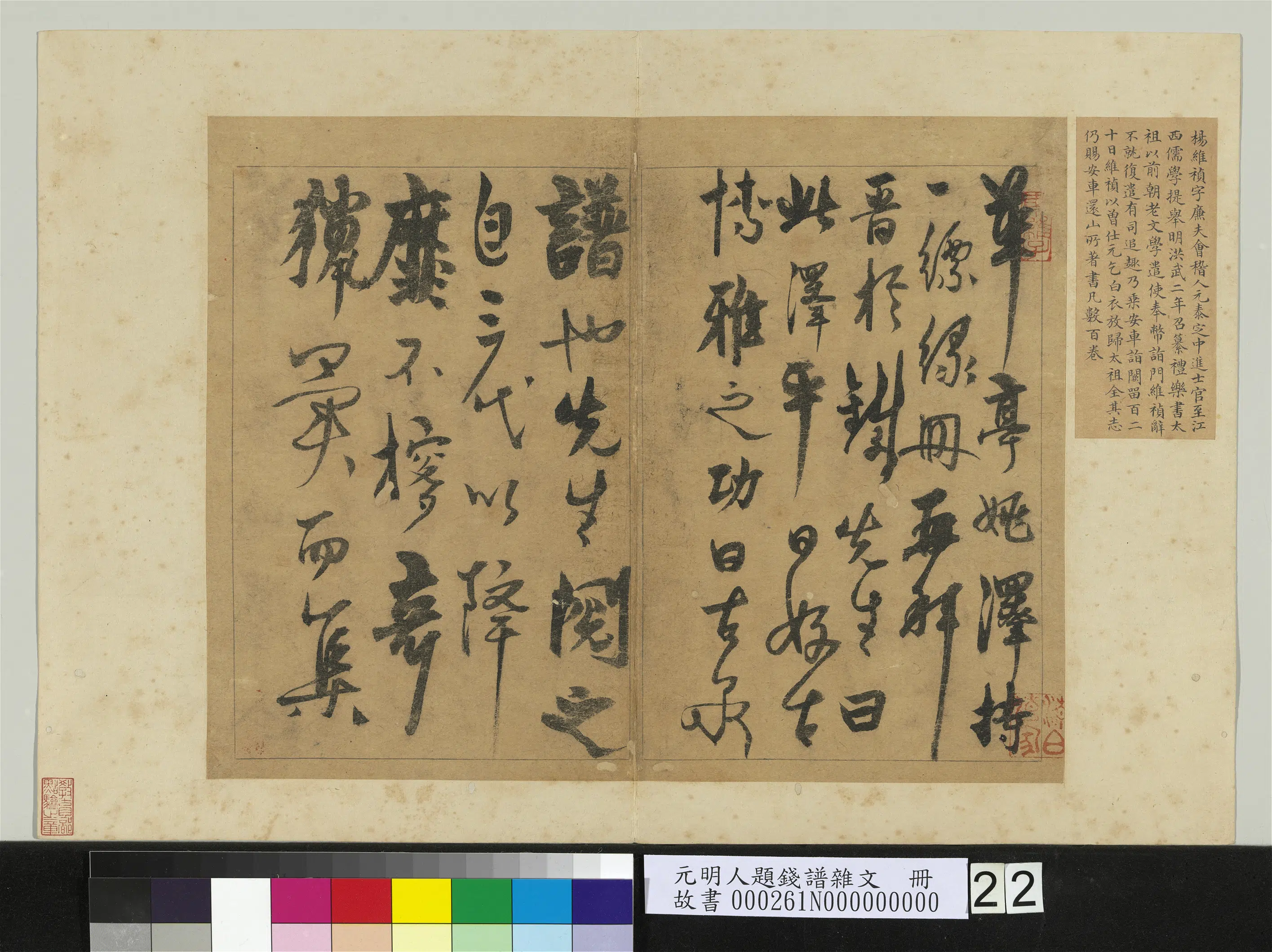
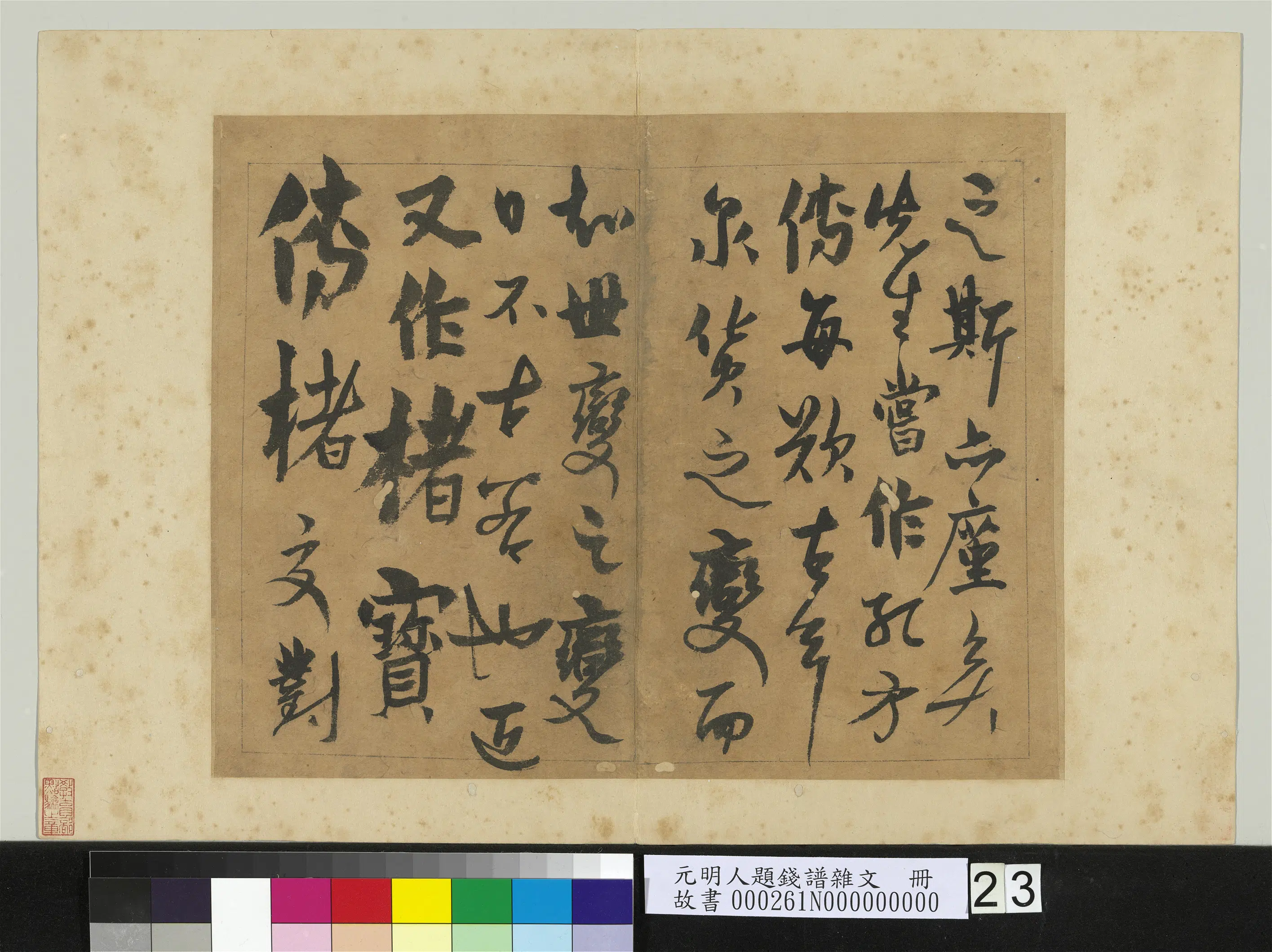
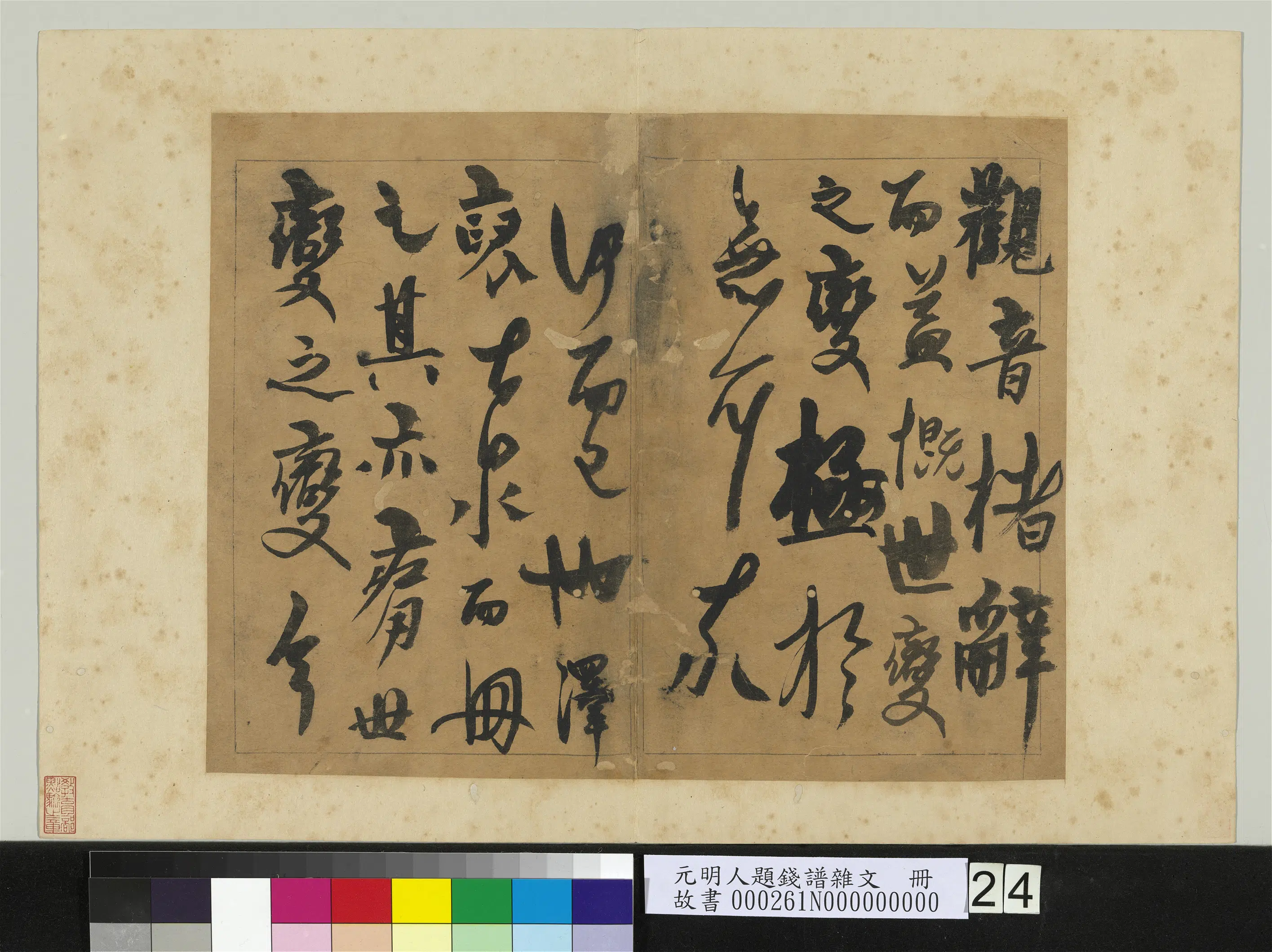
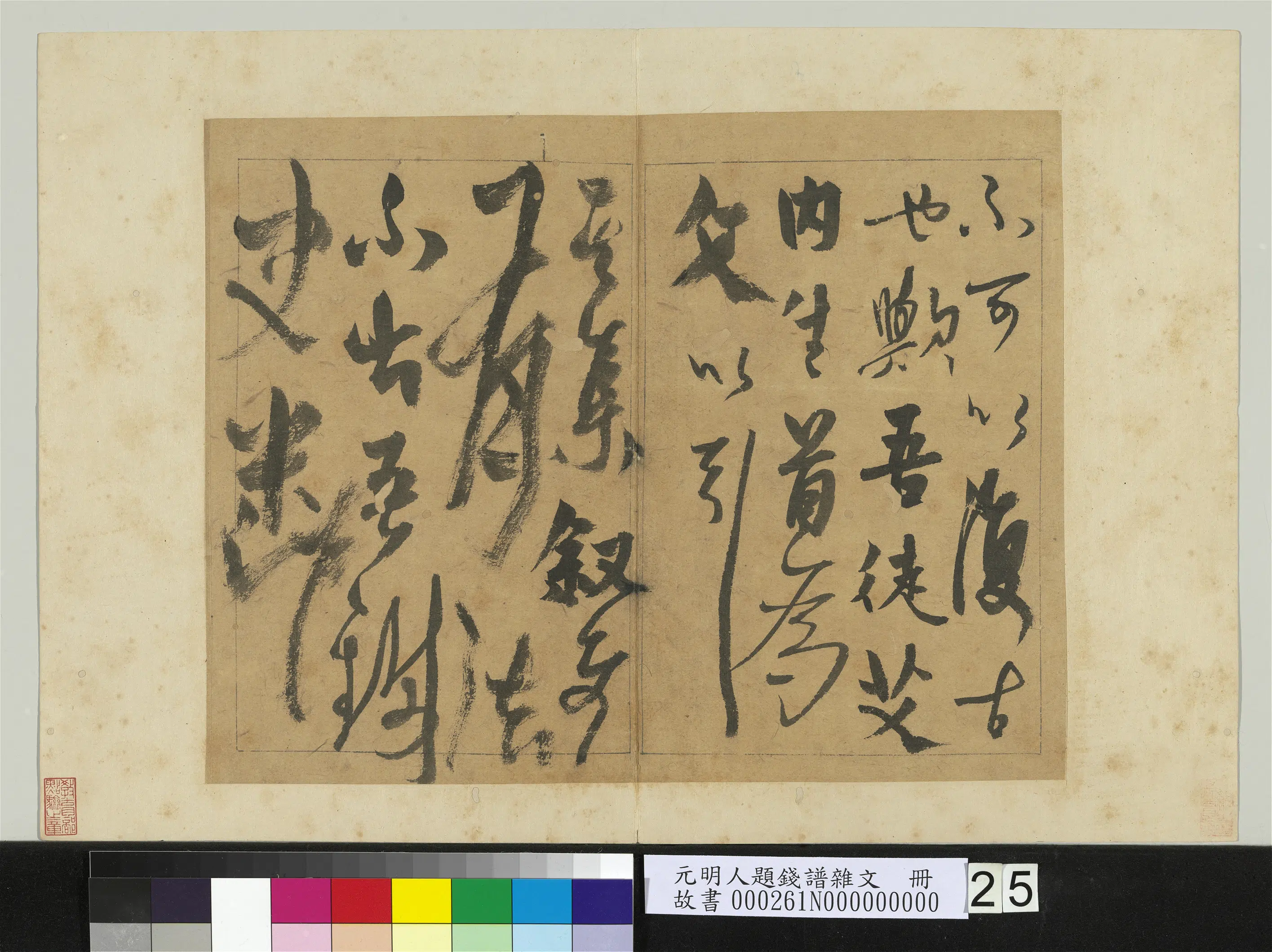
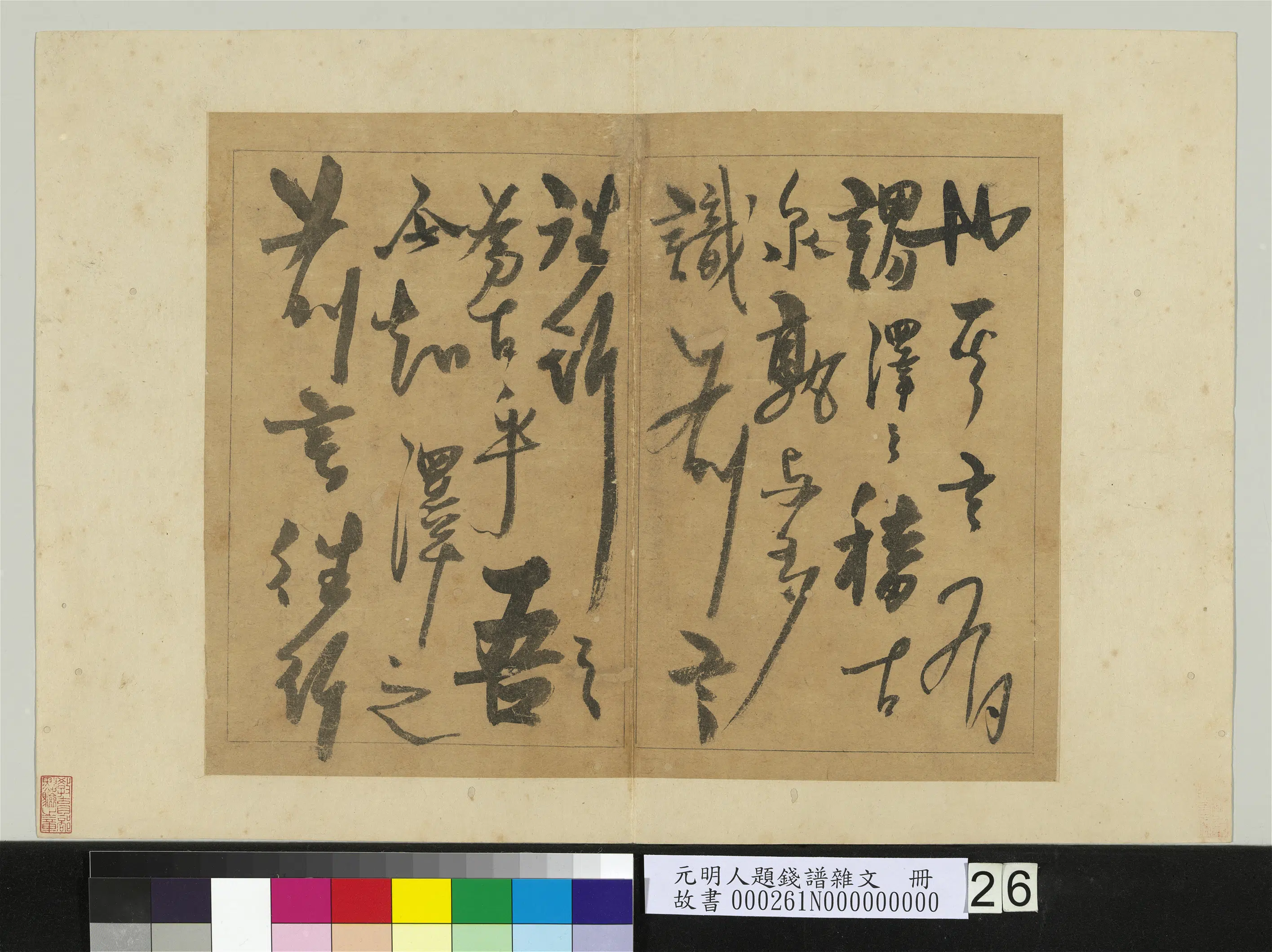
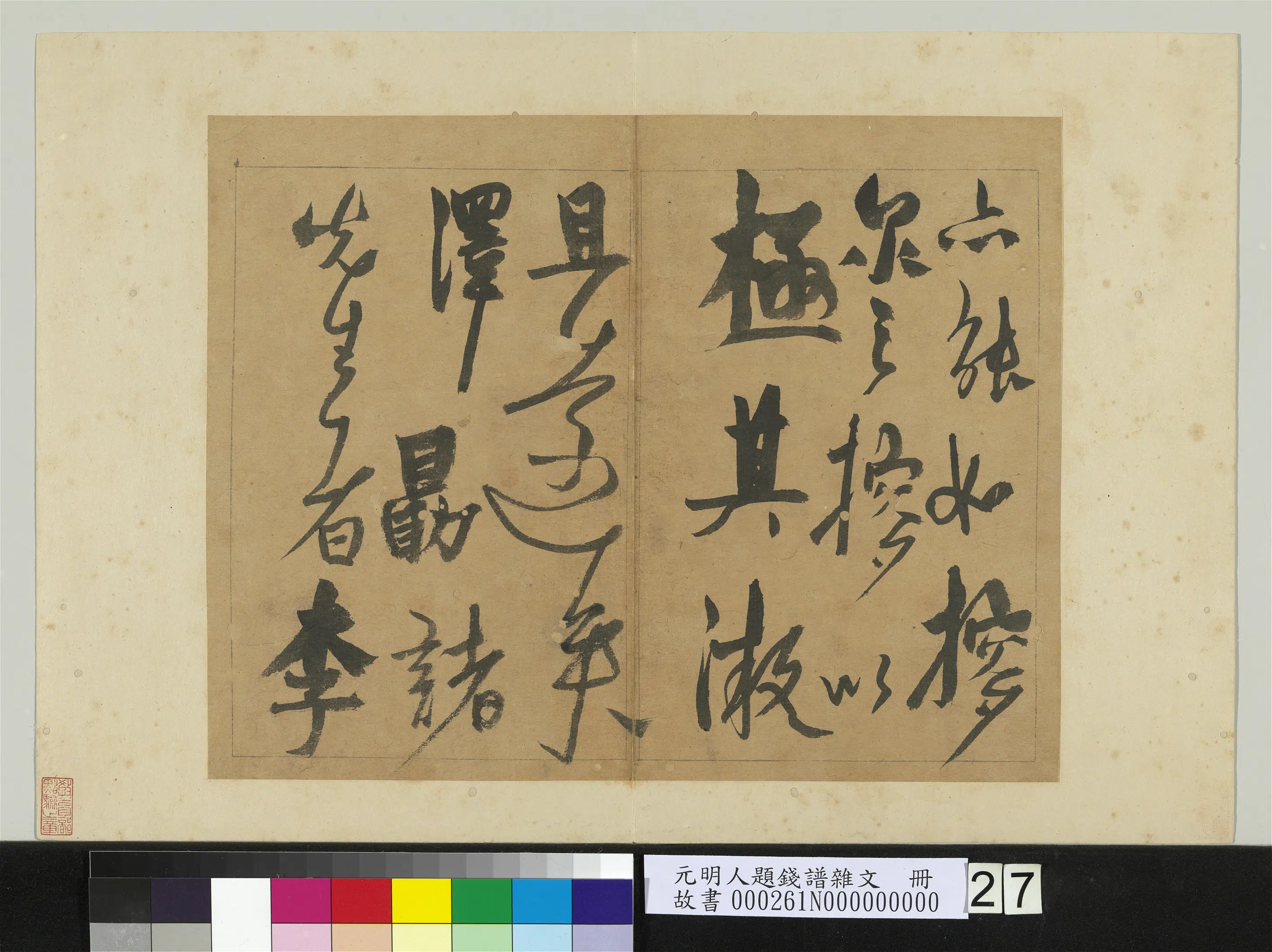
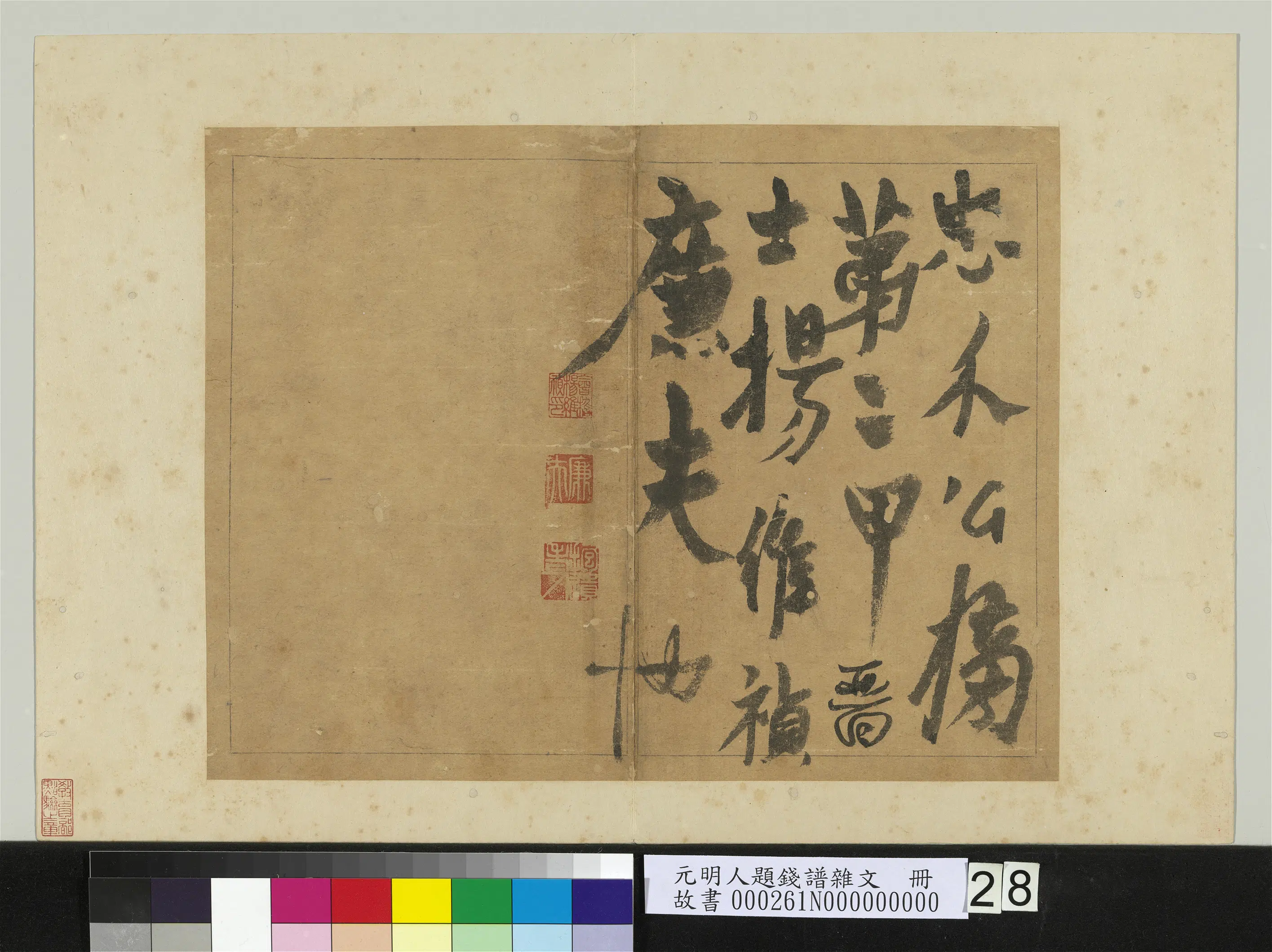
| 释文 | 华亭姚泽持一缥绿册。再拜晋于铁先生曰。此泽平日好古博雅之功。曰古泉谱也。先生阅之。自三代以降。靡不搜奇猎异而集之。斯亦厪矣。先生常作孔方传。每叹古今泉货之变。而知世变之变。曰不古若也。近又作楮宝传。楮交对观音楮辞。而益感慨世变之变。极于无可奈何而已也。泽裒古泉而册之。其益痛世变之变。曰不可以复古也欤。吾徒艾内生首为文以引其集。叙史有法。不出吾铁史断也。其言有谓。泽之稽古泉。熟与多识前言往行之为古乎。吾今知泽之前言往行亦能如搜泉之搜。以其极微且远矣。泽勖诸先生者。李忠介公榜第二甲晋士扬维祯廉夫也。 |
典藏尺寸
| 【位置】 | 【尺寸】(公分) |
| 本幅一至七 | 25.3x32.7 |
质地
| 【质地位置】 | 【质地】 |
| 本幅 | 纸 |
题跋数据
| 【题跋类别】 | 【作者】 | 【位置】 | 【款识】 | 【书体】 | 【全文】 |
| 题签 | 楷书 | 杨维祯字廉夫。会稽人。元泰定中进士。官至江西儒学提举。明洪武二年召纂乐书。太祖以前朝老文学遣使奉币诣门。维祯辞不就。复遣有司追趣。乃乘安车诣阙留百二十日。维祯以曾仕元乞白衣放归。太祖全其志。仍赐安车还山。所著书凡数百卷。 |
| 【印记类别】 | 【印记】 |
| 作者印记 | 会稽杨维祯印 |
| 作者印记 | 廉夫 |
| 作者印记 | 抱遗老人 |
| 作者印记 | 东维子 |
| 作者印记 | 清白传家 |
参考数据
| 【类别】 | 【参考数据】 |
| 收藏着录 | 石渠宝笈初编(养心殿),上册,页467 |
| 收藏着录 | 故宫书画录(卷三),第一册,页269 |
| 参考书目 | 1.国立故宫博物院,1994年初版),页121-122。 2.王竞雄,〈「天子之宝 — 台北国立故宫博物院的收藏」展品系列(五) — 书法、图书文献〉,《故宫文物月刊》,第248期(2003年11月),页13。 3. |
| 内容简介(中文) | 杨维祯(公元一二九六-一三七0年),浙江绍兴人,字廉夫,号东维子、铁笛道人。三十二岁及进士第,署天台尹,以狷介故,为黠吏陷,遂免官,往来苏松一带。然心系国事,曾上正统辩,为时所赏,后复官,会四海兵乱,遂泯迹江浙间。晚年居松江,因其学问文章气节而来从学者众。其文放逸险绝,称铁崖体,书风亦狂怪清劲,与文风相类。本幅草书题松江姚氏所藏古泉谱册,为元明人题钱谱杂文册之十,行笔苍劲,结字奇倔,墨色干湿燥润变化多端,为杨氏晚年精品。 |
| 内容简介(英文) | Yang Wei-chen (style name Lien-fu; sobriquets Tung-wei-tzu, T’ieh-ti-tao-jen) was a native of Shao-hsing, Chekiang. He served as an official in T’ien-t’ai. Because of his stubborn, rash, and straightforward personality, he often encountered difficulties with officials. He eventually gave up officialdom and went to Suchou and Sung-chiang. However, still interested in politics, he submitted an essay on orthodoxy and legitimacy (Cheng-t’ung pien). For this, he received much praise and once again became an official. Late in life, he settled in Sung-chiang. Because of his erudition, his literary output, and his moral integrity, he attracted many students. His literary style is daring and risky, and his calligraphy is equally wild and strange. Yang Wei-chen used cursive calligraphy to write the tenth colophon to the album, Ku-ch’uan-p’u ts’e, which belonged to Mr. Yao of Sung-chiang. Yang Wei-chen’s brush movement is swift and energetic, and the composition of the characters is slightly strange. There is also tremendous variation in the ink tonality. This is a masterpiece which Yang Wei-chen executed late in life. |
| 内容简介(中文) | 杨维祯(公元一二九六—一三七0年),浙江绍兴人,字廉夫,号东维子、铁笛道人。三十二岁及进士第,署天台尹,以狷介故,为黠吏陷,遂免官,往来苏松一带。然心系国事,曾上正统辩,为时所赏,后复官,会四海兵乱,遂泯迹江浙间。晚年居松江,因其学问文章气节而来从学者众。其文放逸险绝,称铁崖体,书风亦狂怪清劲,与文风相类。本幅草书题松江姚氏所藏古泉谱册,为元明人题钱谱杂文册之十,行笔苍劲,结字奇倔,墨色干湿燥润变化多端,为杨氏晚年精品。 |
| 内容简介(英文) | Yang Wei-chen (style name Chien-fu and sobriquets Tung-wei-tzu and T’ieh-ti tao-jen was a native of Shao-hsing, Chekiang. At the age of 31, he received his chin-shih civil service degree and served as Magistrate of T’ien-t’ai. However, he was a direct and stalwart figure who made enemies in office. He was thus removed from office. Thereafter, he spent much time studying dynastic history, taking part in the official debate concerning the orthodoxy of rule. He thus became admired for his stance and was restored to his post. With the fall of the Yuan dynasty, he travelled about the south, and in his later years resided in Sung-chiang. Due to his reputation as a scholar and writer, he had many students. His writing was unrestrained and untrammelled in a style that was named after him. His calligraphic style was also somewhat wild and u |
