

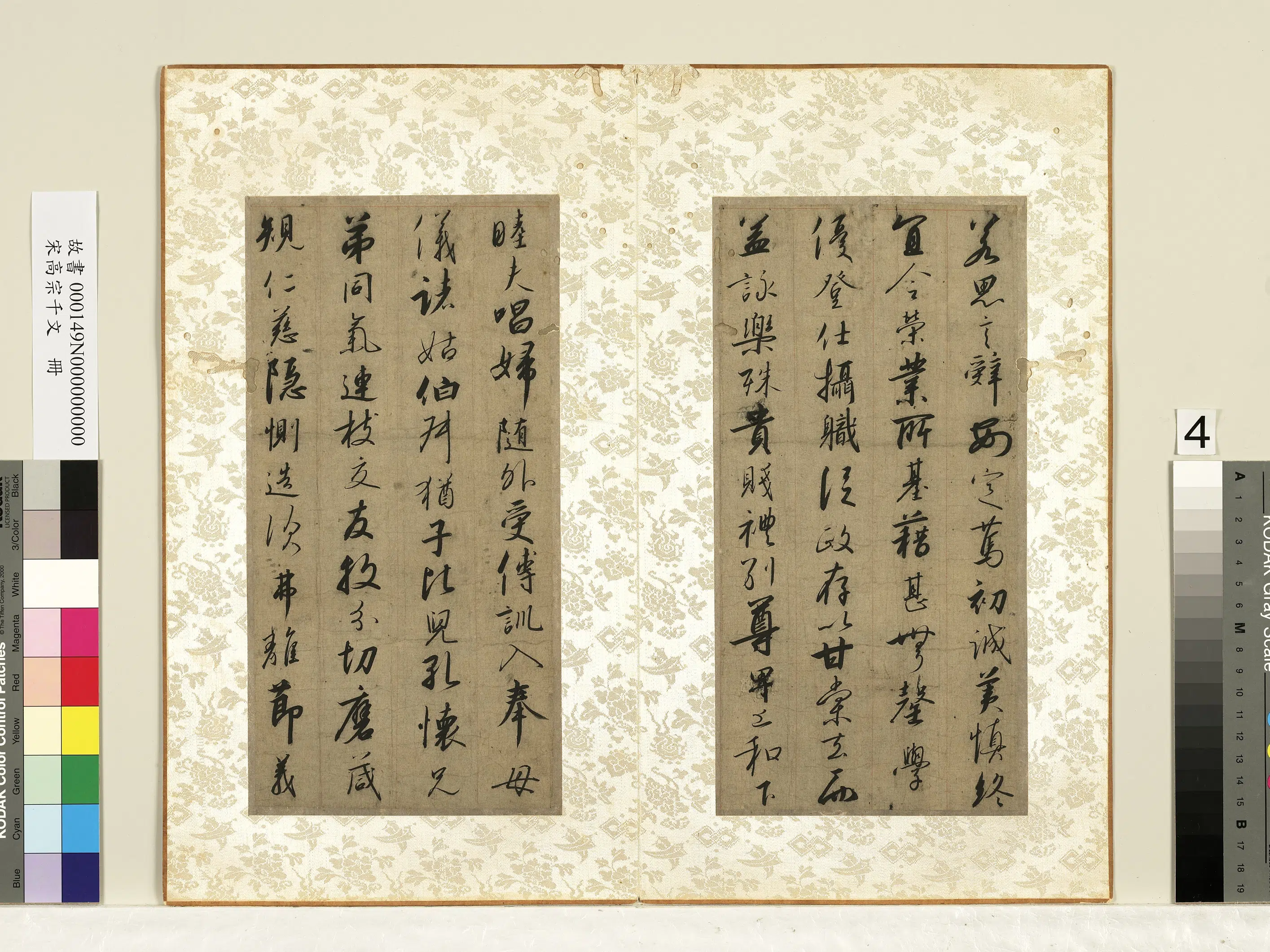
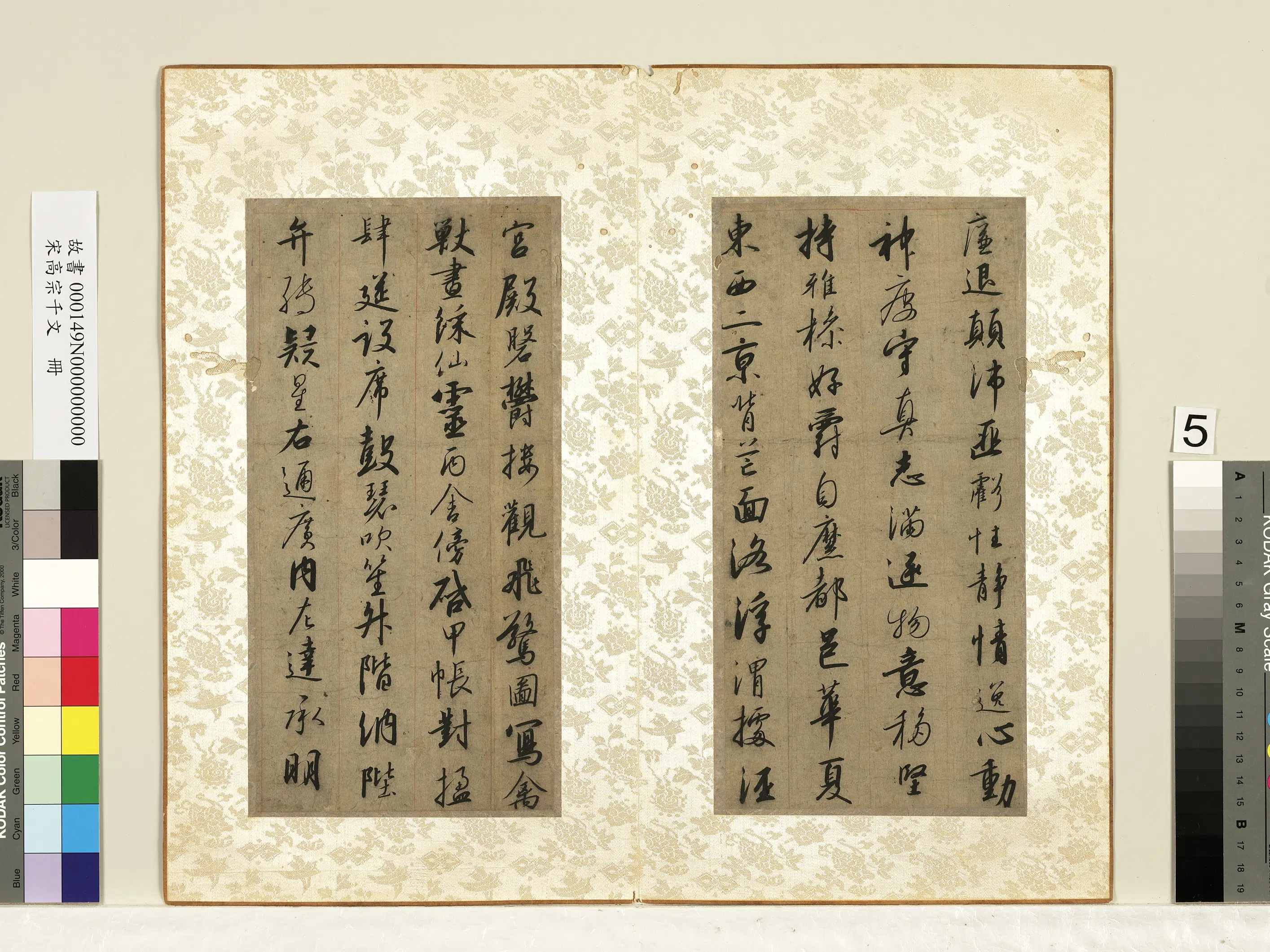
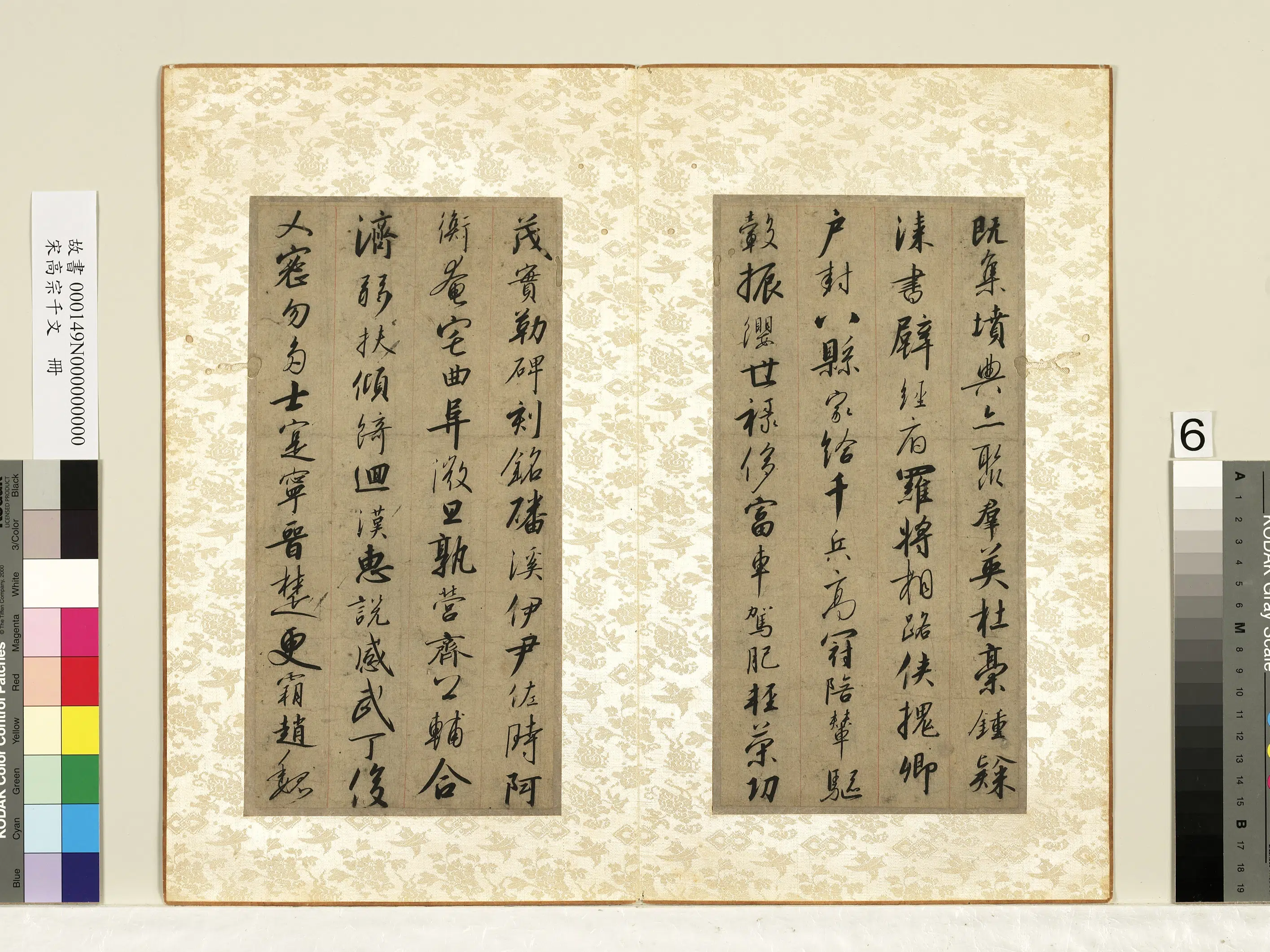
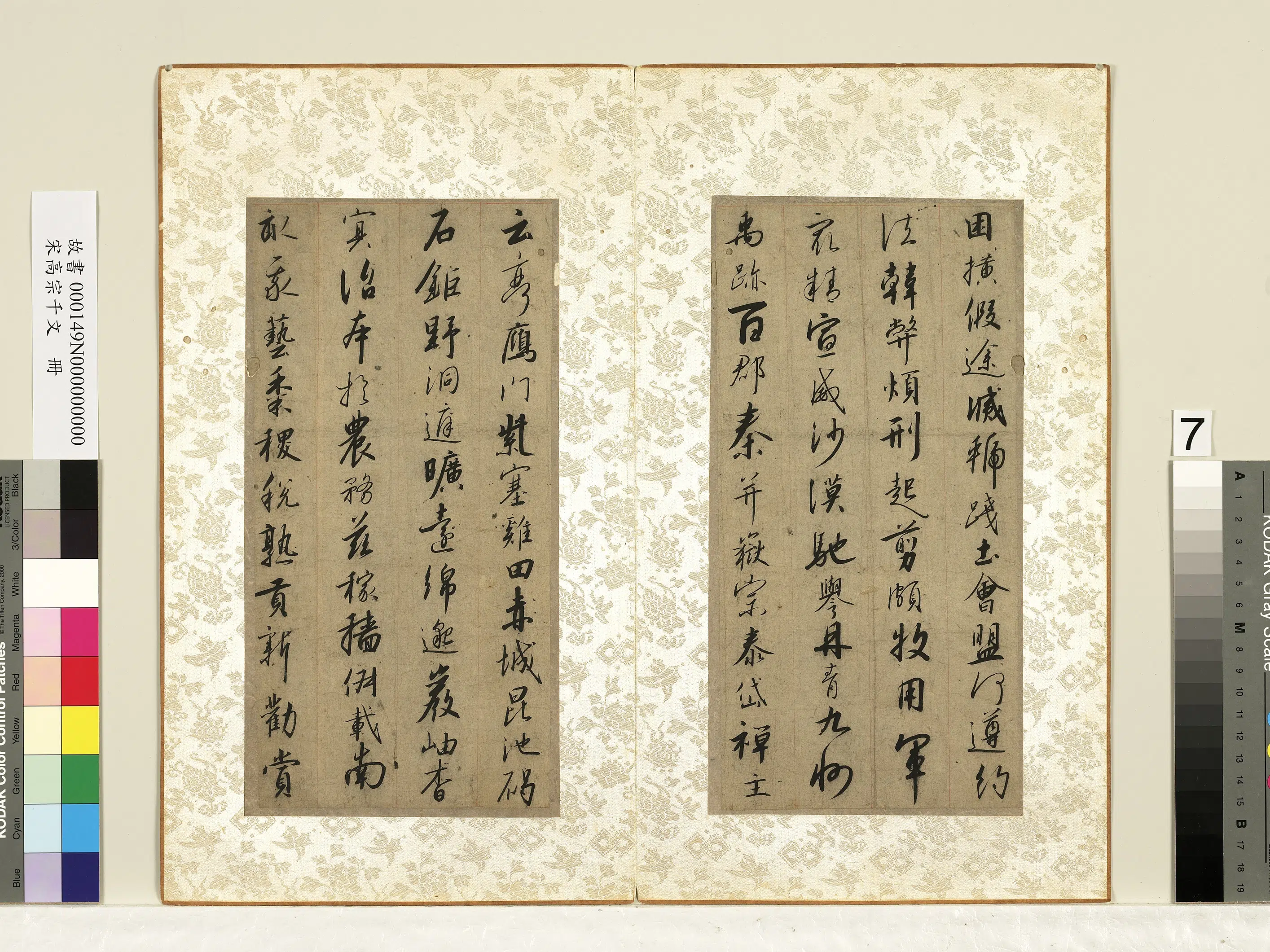
【国画基本信息】
| 作者 | 赵构 |
| 品名 | 宋高宗千文册 |
| 朝代 | 南宋 |
| 文件大小 | 198.01MB |
| 分辨率 | 300x300 |
| 像素大小 | 2829x2121 |
| 尺寸(CM) | 23.95x17.95 |
| 创作时间 | 宋高宗绍兴二十三年(1153) |
| 作品数量 | 11 |
| 作品收藏 | 台北故宫博物院 |
| 图片格式 | 默认提供TIF和JPG两个版本 |
基本数据
| 藏品类型 | 书法 |
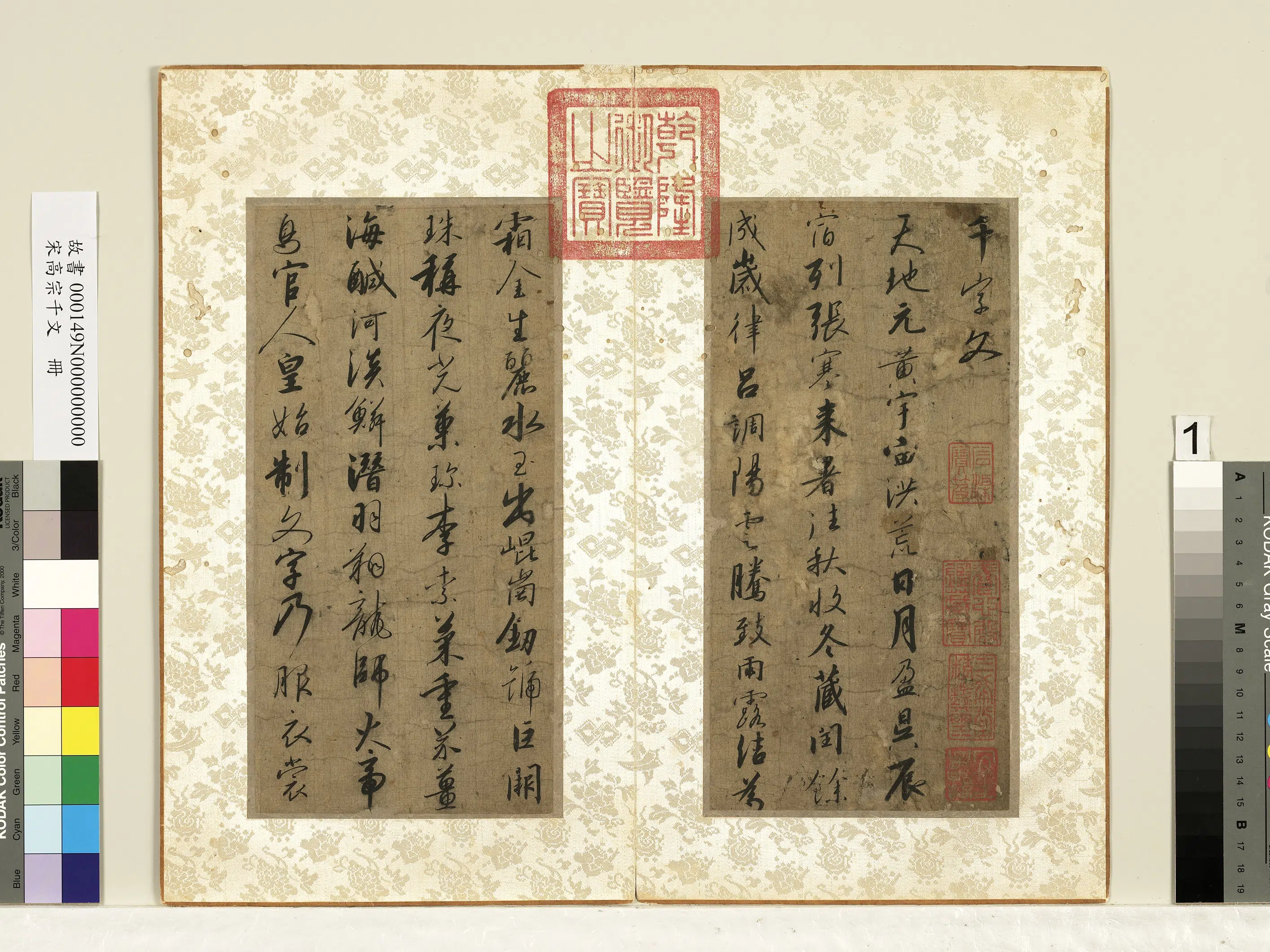
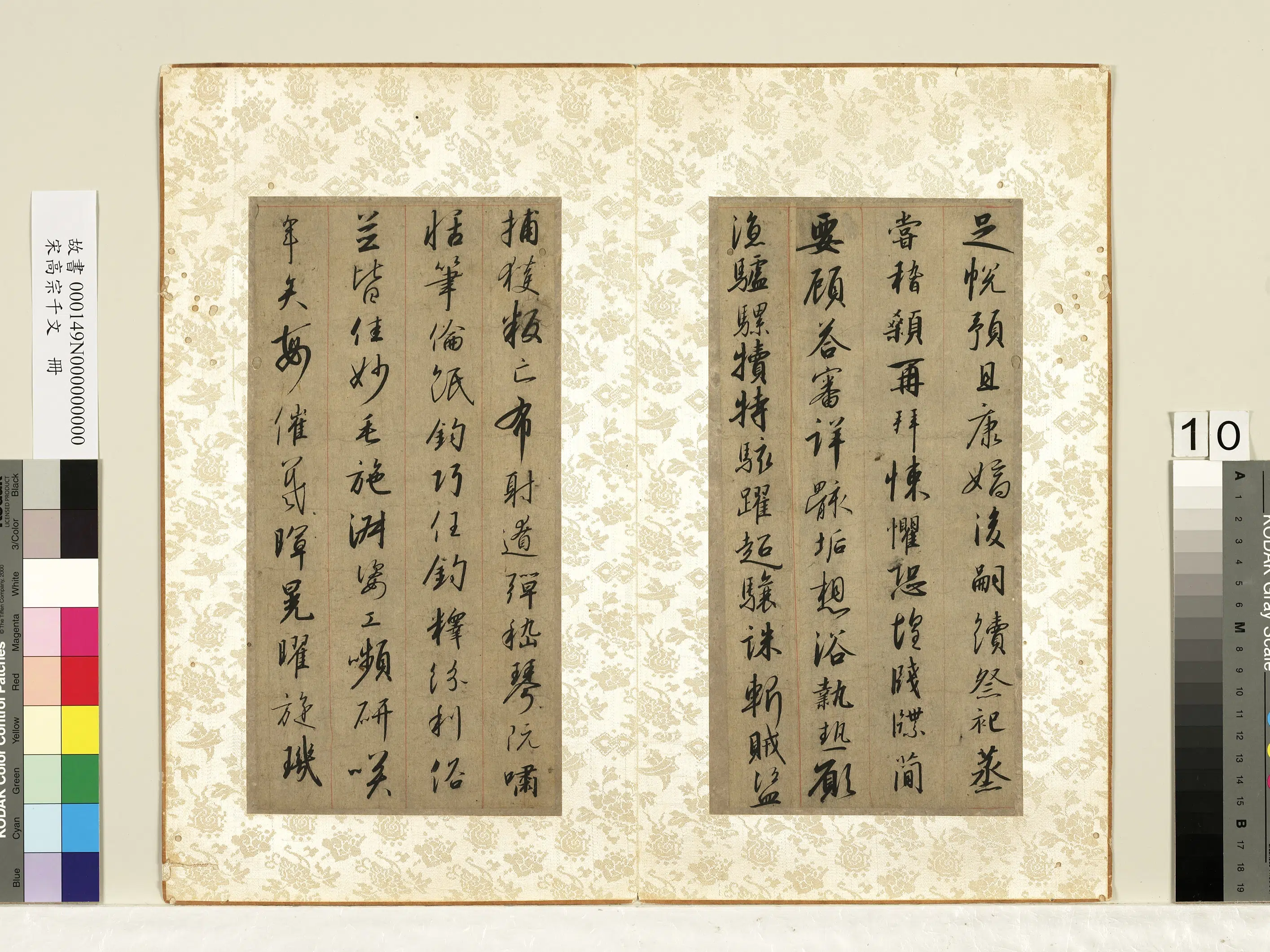
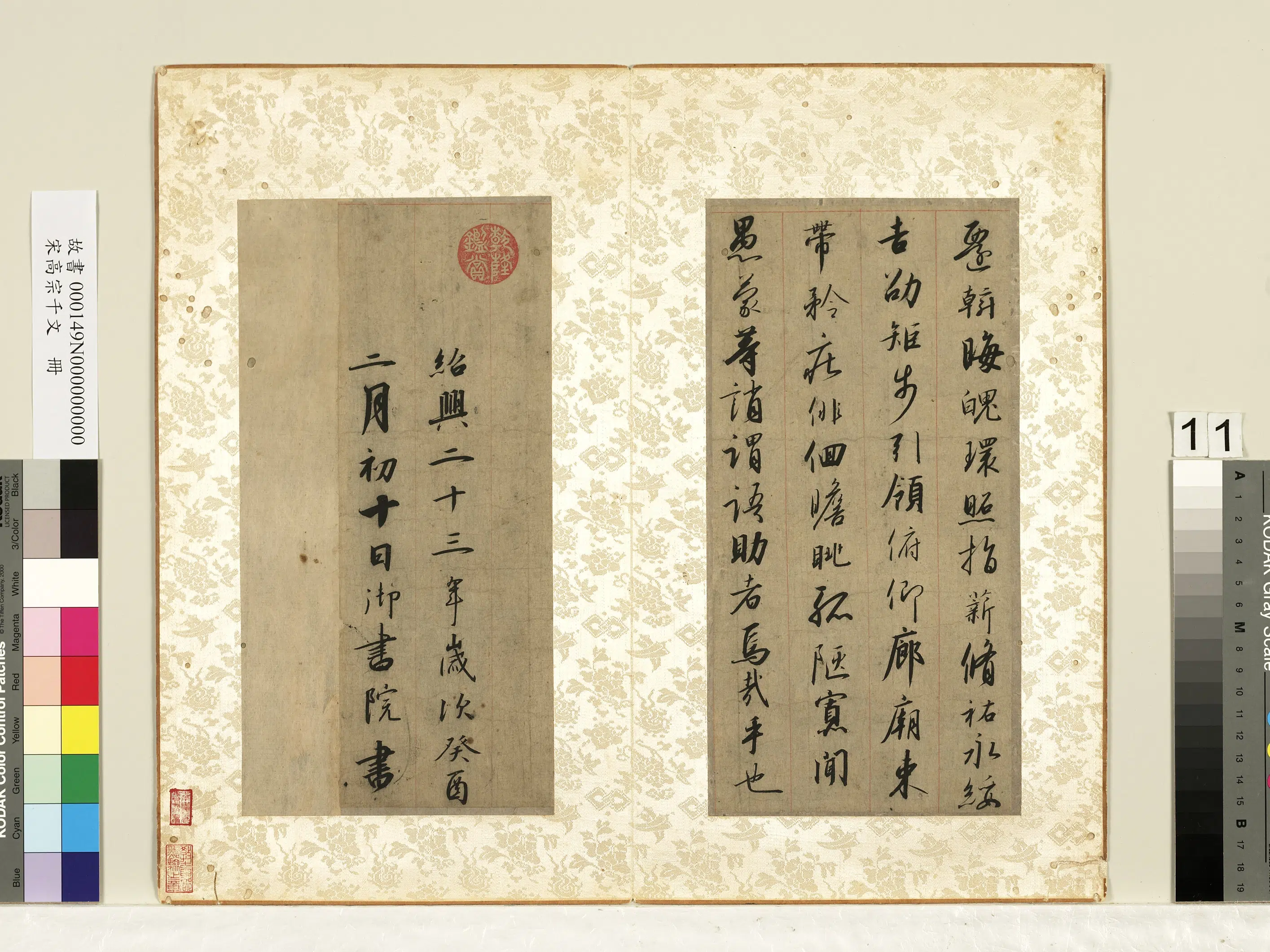
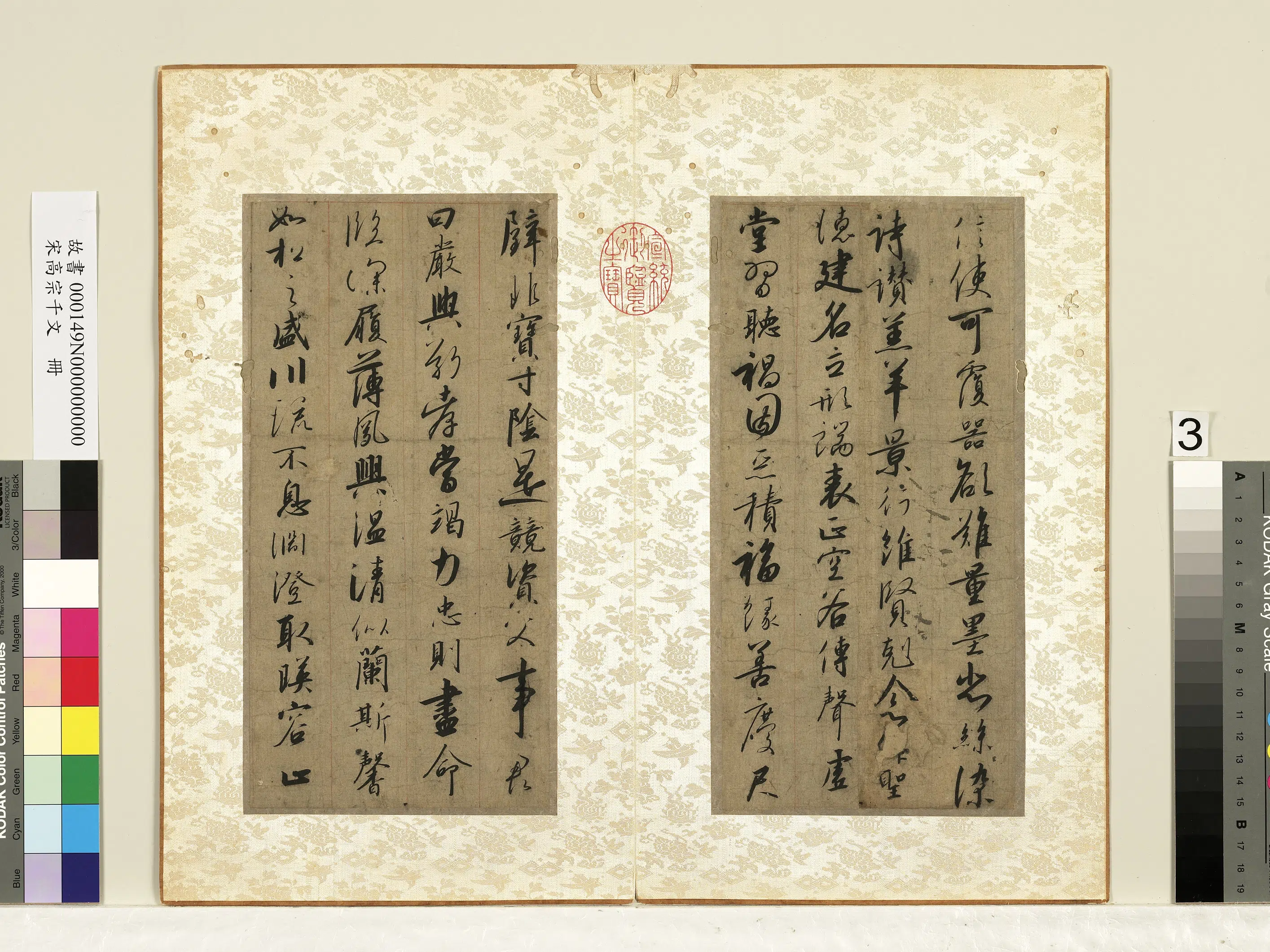
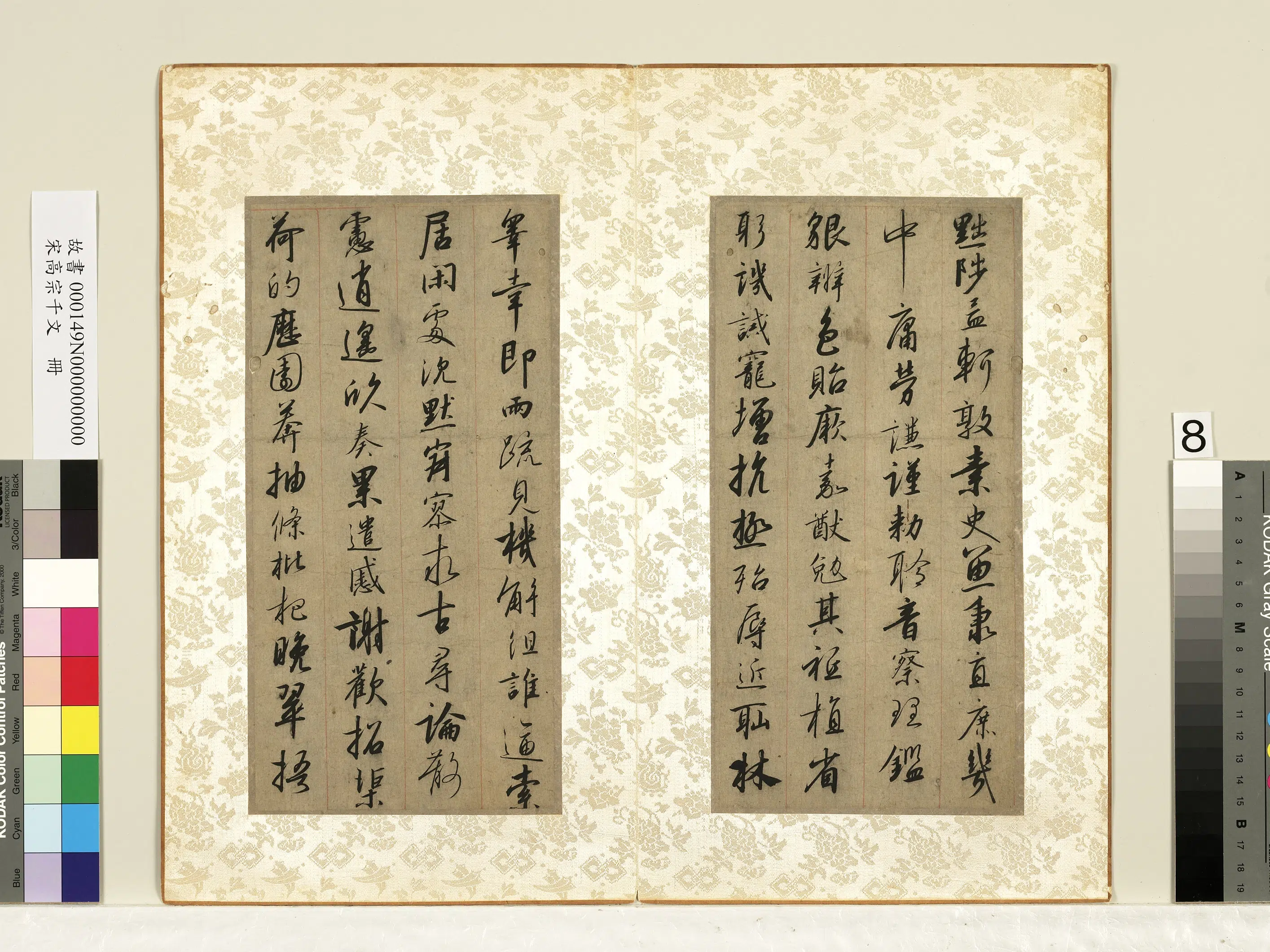
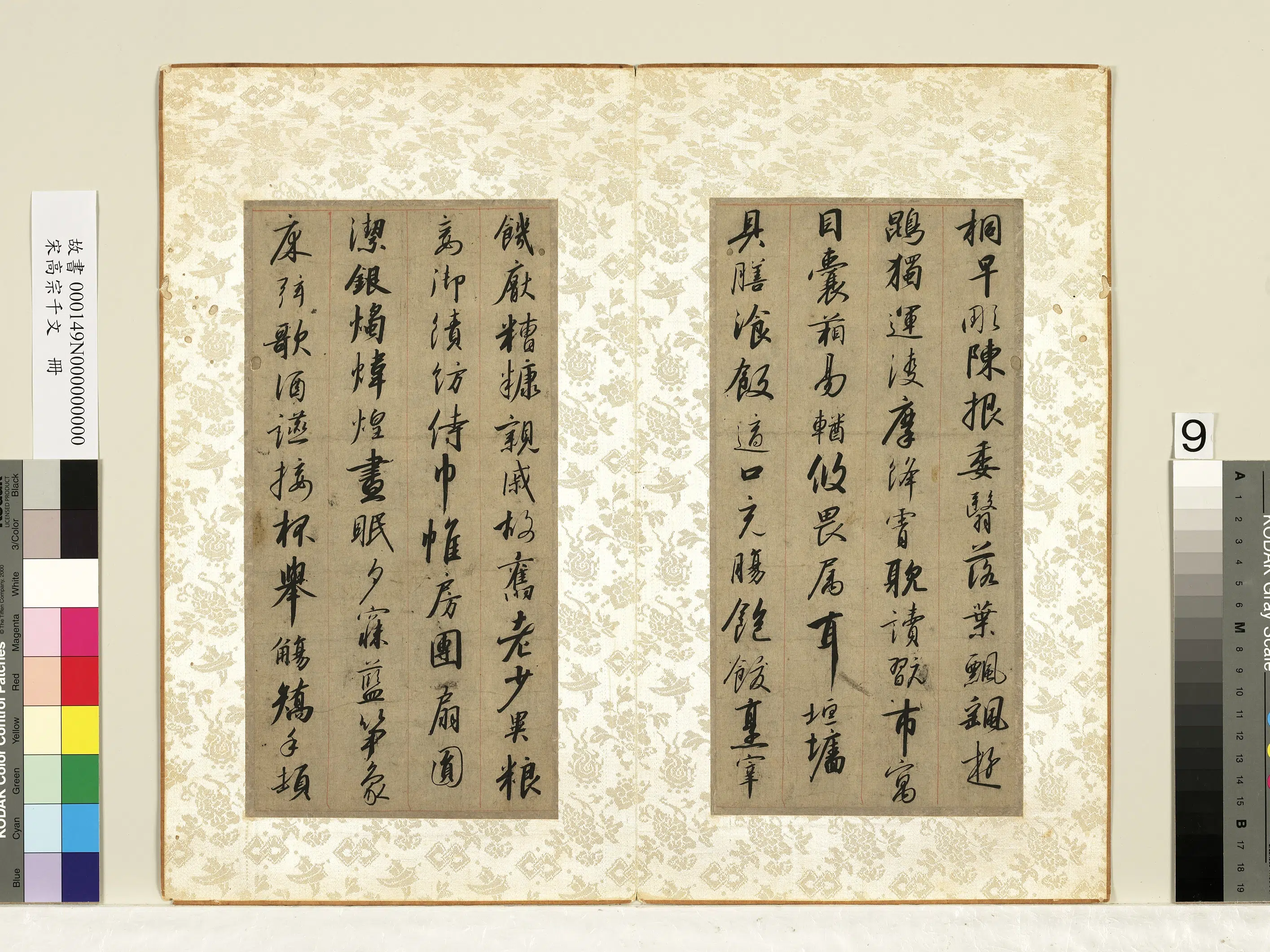
| 品名 | 宋高宗千文 册 Thousand-Character Essay (Originally attributed to Emperor Gaozong [1107-1187]) |
| 分类 | 法书 |
| 作者 | 赵构 |
| 书体 | 行书 |
| 创作时间 | 宋高宗绍兴二十三年(1153) |
| 数量 | 一册:十一开(本幅十一开二十二幅) |
| 作品语文 | 汉文 |
| 释文 | (行书千字文。文不录。)绍兴二十三年(公元一一五三年)岁次癸酉二月初十日御书院书。 |
典藏尺寸
| 【位置】 | 【尺寸】(公分) |
| 本幅 | 28.5x14.5 |
质地
| 【质地位置】 | 【质地】 |
| 本幅 | 纸 |
题跋数据
| 【题跋类别】 | 【作者】 | 【位置】 | 【款识】 | 【书体】 | 【全文】 |
| 签 | 清高宗 | 封面 | 草书 | 宋高宗千文真迹。御府秘玩。 | |
| 印记: 乾隆宸翰、乾隆御赏之宝 | |||||
| 【印记类别】 | 【印记】 |
| 鉴藏宝玺 | 乾隆御览之宝 |
| 鉴藏宝玺 | 乾隆鉴赏 |
| 鉴藏宝玺 | 石渠宝笈 |
| 鉴藏宝玺 | 三希堂精鉴玺 |
| 鉴藏宝玺 | 宜子孙 |
| 鉴藏宝玺 | 养心殿鉴藏宝 |
| 鉴藏宝玺 | 嘉庆御览之宝 |
| 鉴藏宝玺 | 宣统御览之宝 |
参考数据
| 【类别】 | 【参考数据】 |
| 收藏着录 | 石渠宝笈初编(养心殿),上册,页460 |
| 收藏着录 | 故宫书画录(卷三),第一册,页22 |
| 收藏着录 | 故宫历代法书全集,第十册,页112-135、207-208 |
| 内容简介(中文) | 此作书于朱丝栏纸本上,《石渠宝笈》定为宋高宗书,然应为御书院书家所书,写于绍兴二十三年(1153)。此册避讳处甚多,例如第六行「敬」字缺末笔,乃是避宋太祖赵匡胤之祖父赵敬。全册线条粗细变化明显,颇类〈集字圣教序〉,用笔亦皆精熟流畅,结体略偏瘦长,字形优美,带有浓厚的古典气息,反映出宋高宗所提倡的复古书风。 |
| 内容简介(英文) | The authors of the Qing dynasty imperial catalogue Treasured Boxes of the Stone Moat (Shiqu baoji) attributed this work on red-lined paper to the Song emperor Gaozong (personal surname Zhao). Done in 1153, it appears instead to have come from the hand of a member of his Calligraphy Academy. The calligrapher observed many taboo characters in this album, including “jing 敬” in the sixth line that is missing its last stroke. This observes the taboo character in the personal name of Zhao Jing, the grandfather of Zhao Kuangyin (the founding emperor of the Song dynasty, Taizu). The lines throughout the album reveal clear distinctions in thickness similar to those in “Preface of Collected Characters for the Sacred Teaching.” The brushwork here is also adept and fluid, while the character forms are slightly thin and elongated. The elegant characters are also strongly archaic, reflecting the revivalist calligraphy promoted by Emperor Gaozong. |
| 内容简介(中文) | 千字文相传起于南北朝之际,代代流传下来,除了作为童蒙阶段识字教本之外,同时与书艺结下不解之缘。此册行书千文,文后详明书写年代、地点,却未见书者具名,从结体、笔法均与唐怀仁〈集王书圣教序〉相近看来,作者当属绍兴年间御书院中任职人员。由于宋人讲求避讳,其中一部分字目书写时因而阙略笔画,或者用其他字目代替,文句于是与常见的千文内容稍有不同。(20101015) |
| 内容简介(英文) | The “Thousand-Character Essay” began circulating in the interval between the Northern and Southern Dynasties. Passed down through the generations, it not only was used as a primer for instructing children, it also has been closely associated with the art of calligraphy. This album version of the essay in running script has a specific date (1153) and place of production indicated at the end, but no name of the calligrapher. Judging from the similarity of the character structure and brushwork to Huairen’s “Collected Wang [Xizhi] Ch |
