
【国画基本信息】
| 作者 | 查士标 |
| 品名 | 书画合璧册(9开) |
| 朝代 | 清代 |
| 文件大小 | 161.97MB |
| 分辨率 | 300x300 |
| 像素大小 | 2831x2119 |
| 尺寸(CM) | 23.96x17.94 |
| 作品数量 | 9 |
| 作品收藏 | 台北故宫博物院 |
| 图片格式 | 默认提供TIF和JPG两个版本 |
基本数据
| 藏品类型 | 书法,绘画 |
| 品名 | 清查士标书画合璧 册 |
| 分类 | 绘画 |
| 作者 | 查士标 |
| 数量 | 一册:九开(本幅八开十六幅,后副叶一开一幅) |
| 作品语文 | 汉文 |
典藏尺寸
| 【位置】 | 【尺寸】(公分) |
| 本幅 | 17.5x12.4 |
| 后副叶 | 19.2x28 |
质地
| 【质地位置】 | 【质地】 |
| 本幅 | 纸 |
| 后副叶 | 纸 |
题跋数据
| 【题跋类别】 | 【作者】 | 【位置】 | 【款识】 | 【书体】 | 【全文】 |
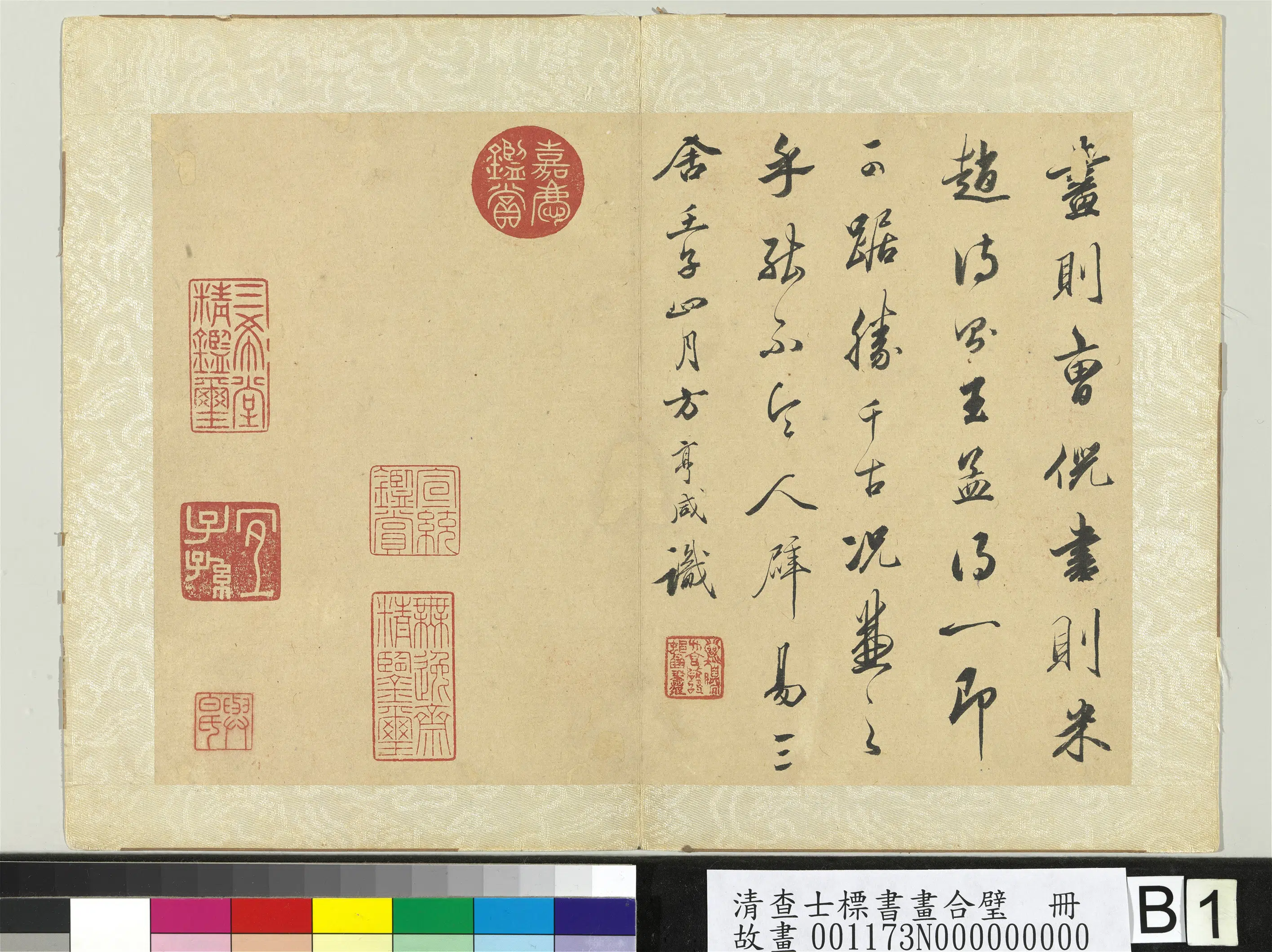
| 题跋 | 方亨咸 | 后副叶 | 壬子四月。方亨咸识。 | 草书 | 画则曹倪。书则米赵。诗则王孟。得一即可踞胜千古。况兼之乎。能不令人辟易三舍。壬子四月。方亨咸识。 |
| 印记: 龙眠方亨咸邵邨图书 | |||||
| 【印记类别】 | 【印记】 |
| 鉴藏宝玺 | 嘉庆御览之宝 |
| 鉴藏宝玺 | 嘉庆鉴赏 |
| 鉴藏宝玺 | 石渠宝笈 |
| 鉴藏宝玺 | 三希堂精鉴玺 |
| 鉴藏宝玺 | 宜子孙 |
| 鉴藏宝玺 | 宝玺三编 |
| 鉴藏宝玺 | 宣统御览之宝 |
| 鉴藏宝玺 | 宣统鉴赏 |
| 鉴藏宝玺 | 无逸斋精鉴玺 |
| 收传印记 | 与白氏 |
| 收传印记 | 松下清斋 |
参考数据
| 【类别】 | 【参考数据】 |
| 收藏着录 | 石渠宝笈三编(延春阁),第五册,页2148 |
| 收藏着录 | 故宫书画录(卷六),第三册,页103 |
| 收藏着录 | 故宫书画图录,第二十三册,页294-297 |
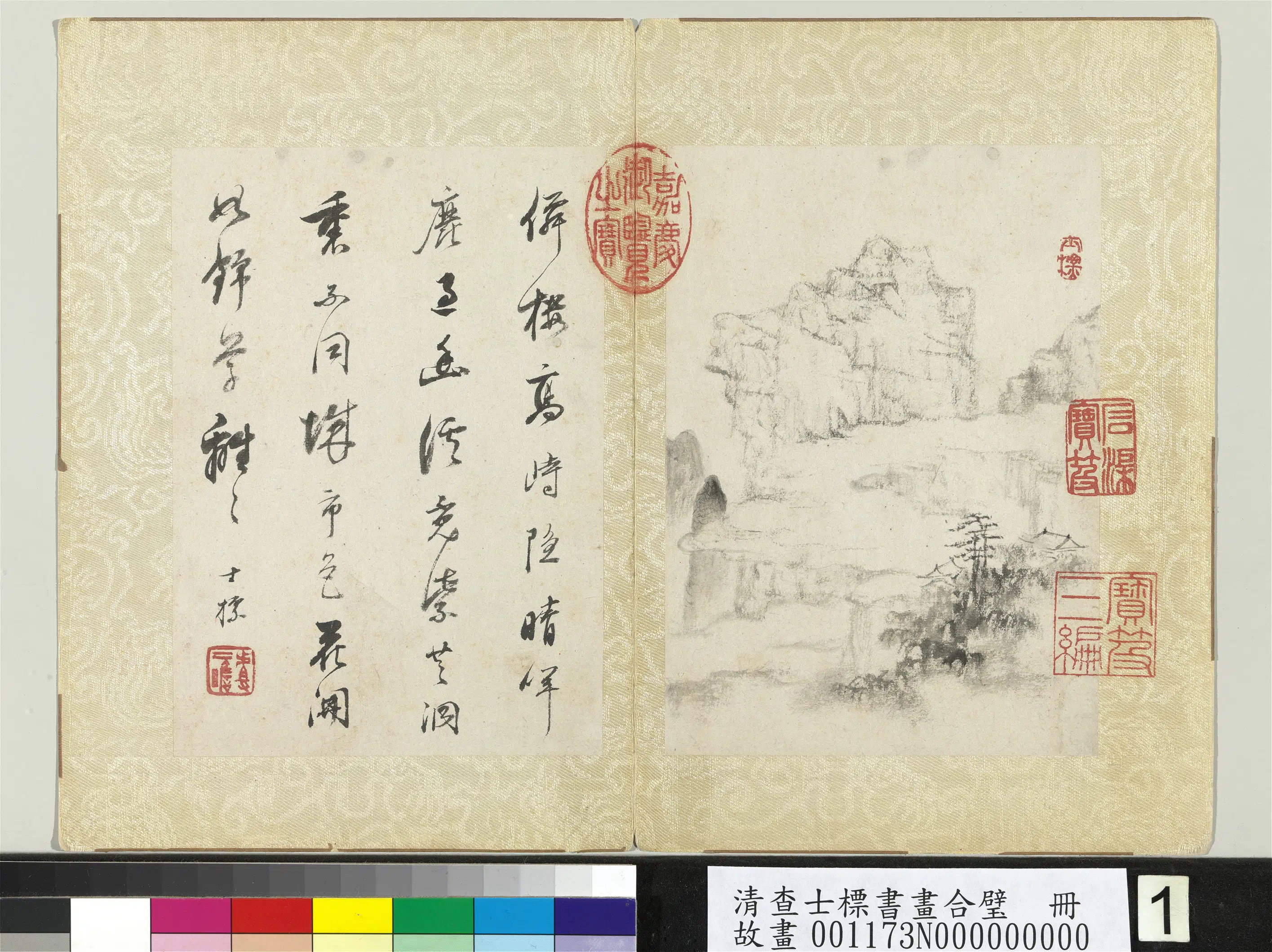
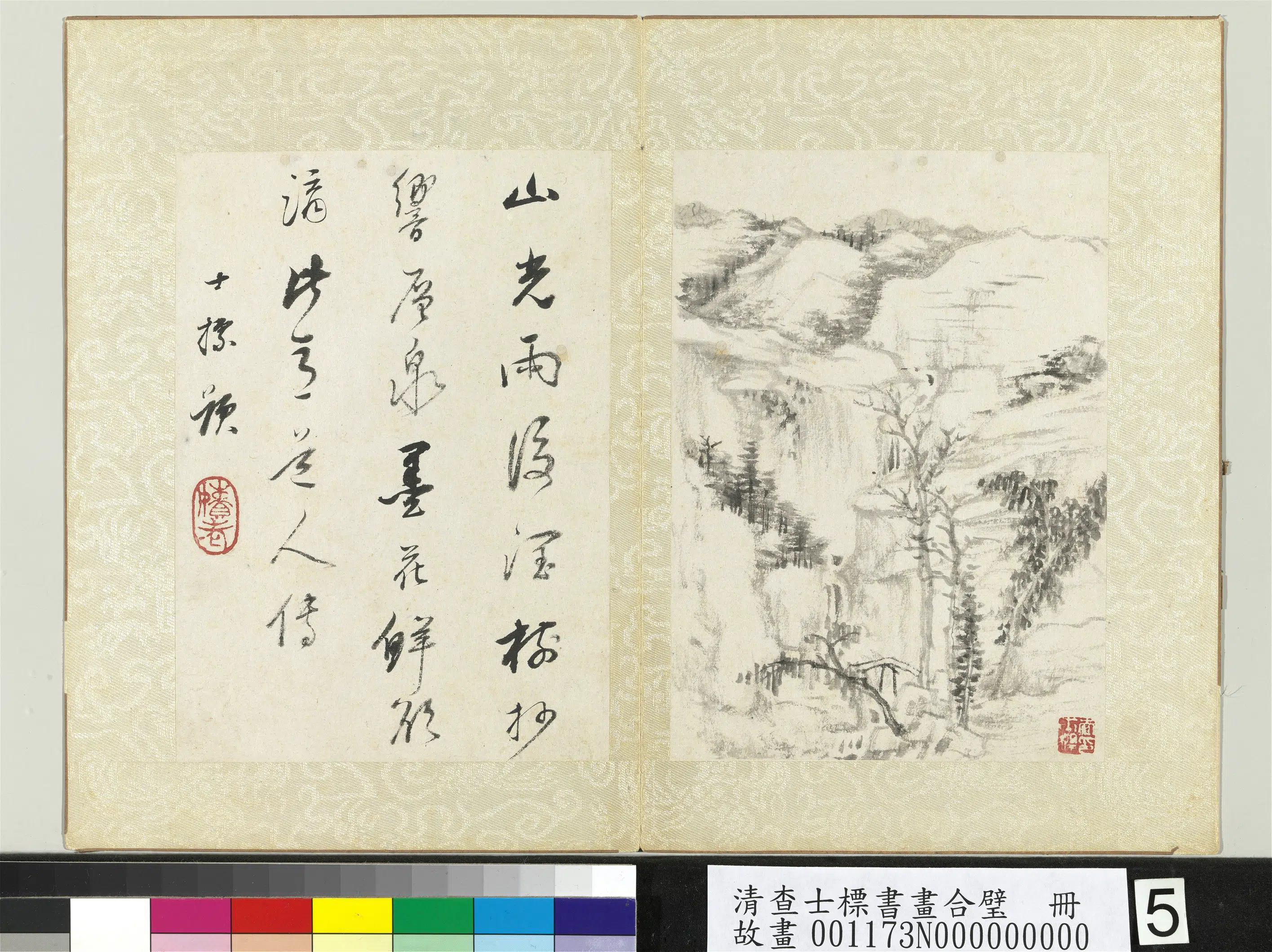
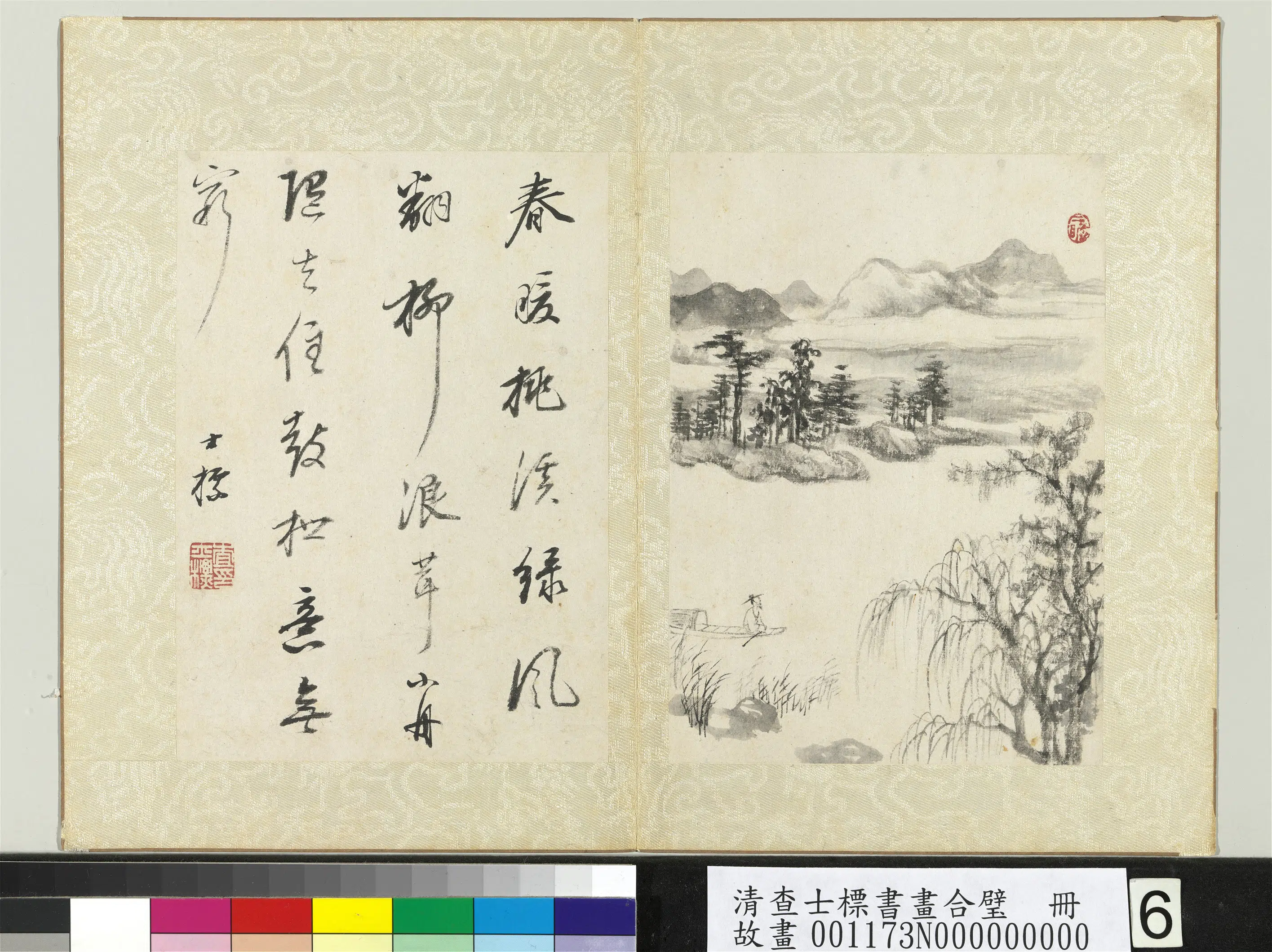
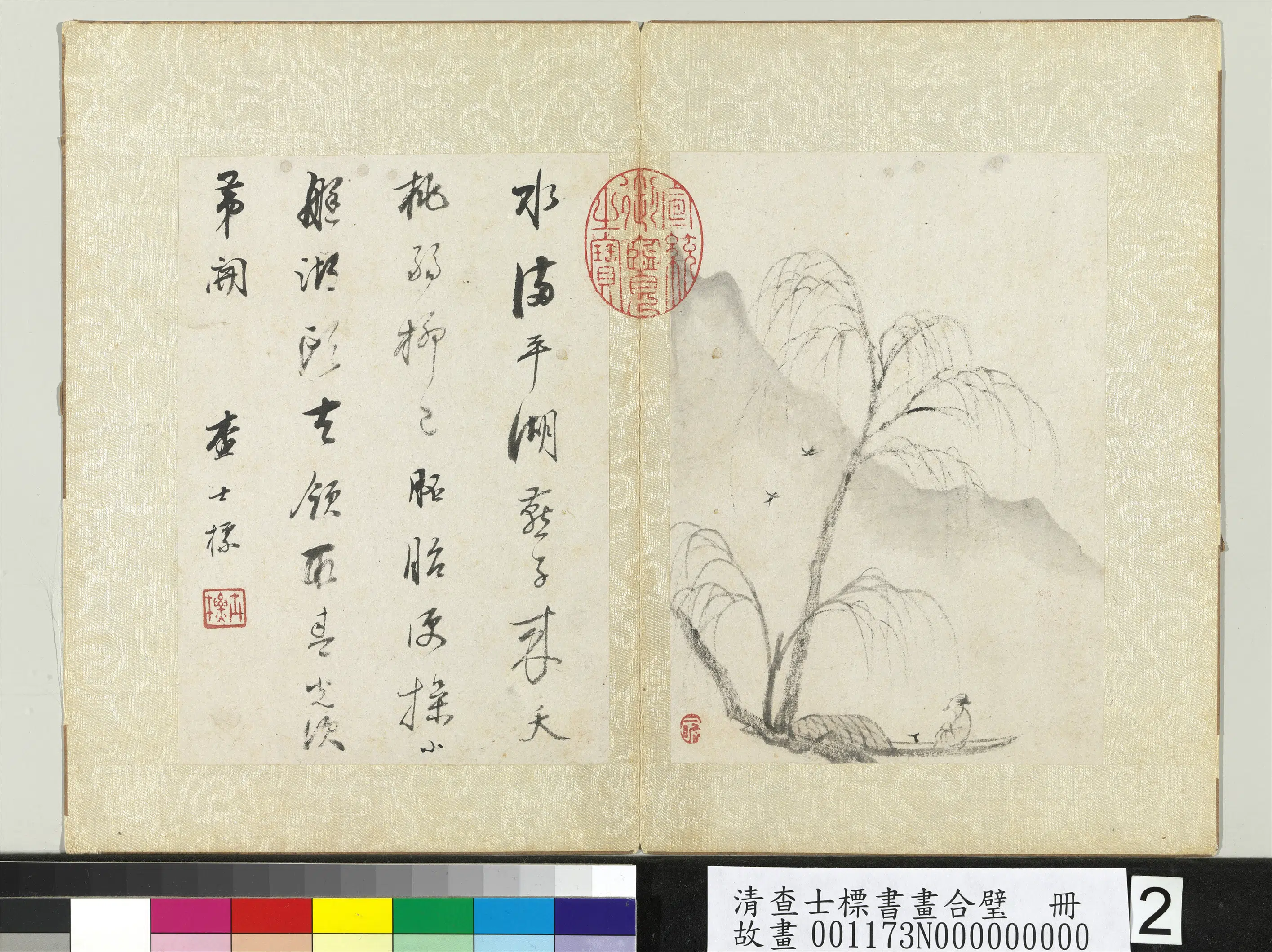
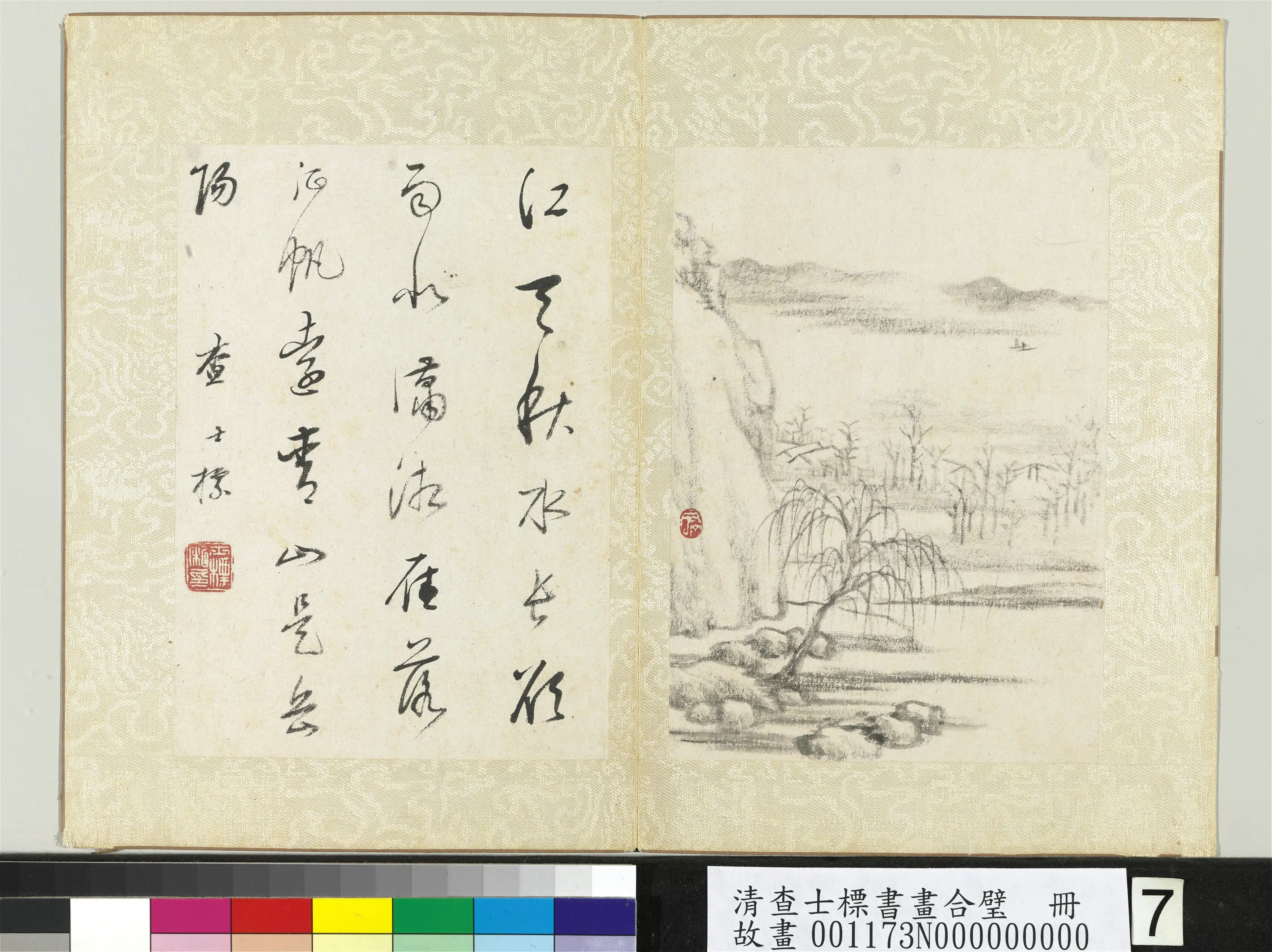
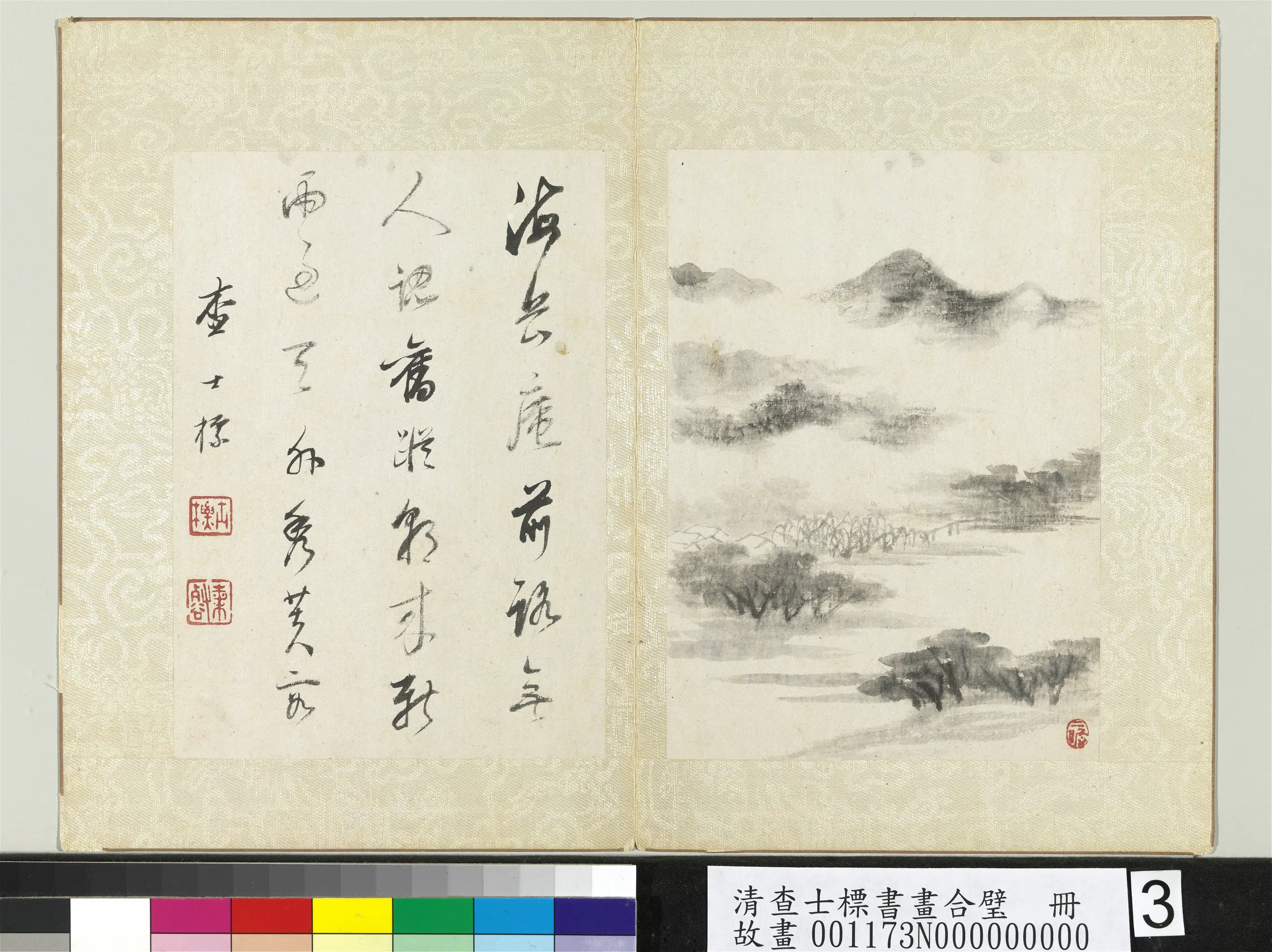
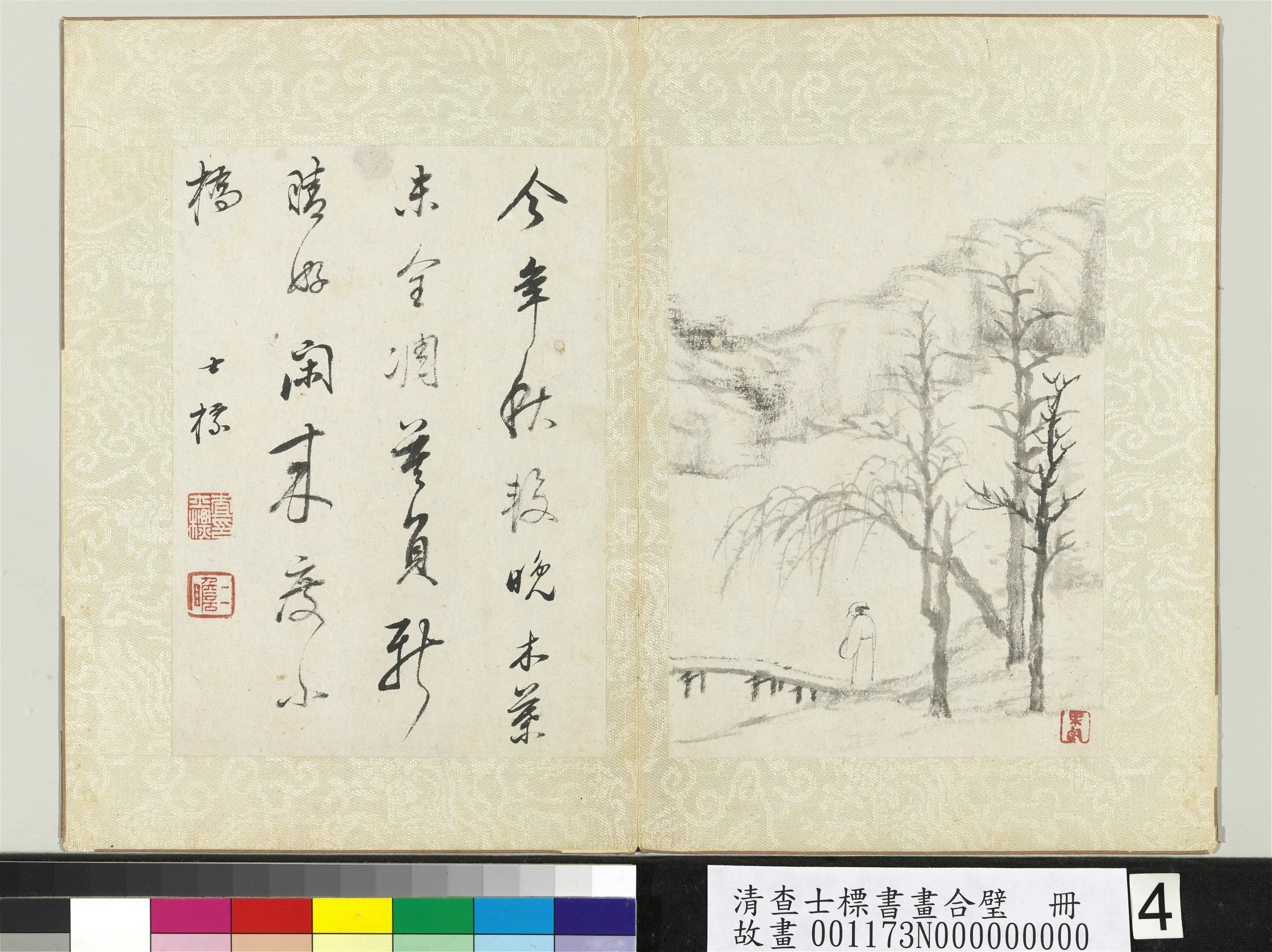
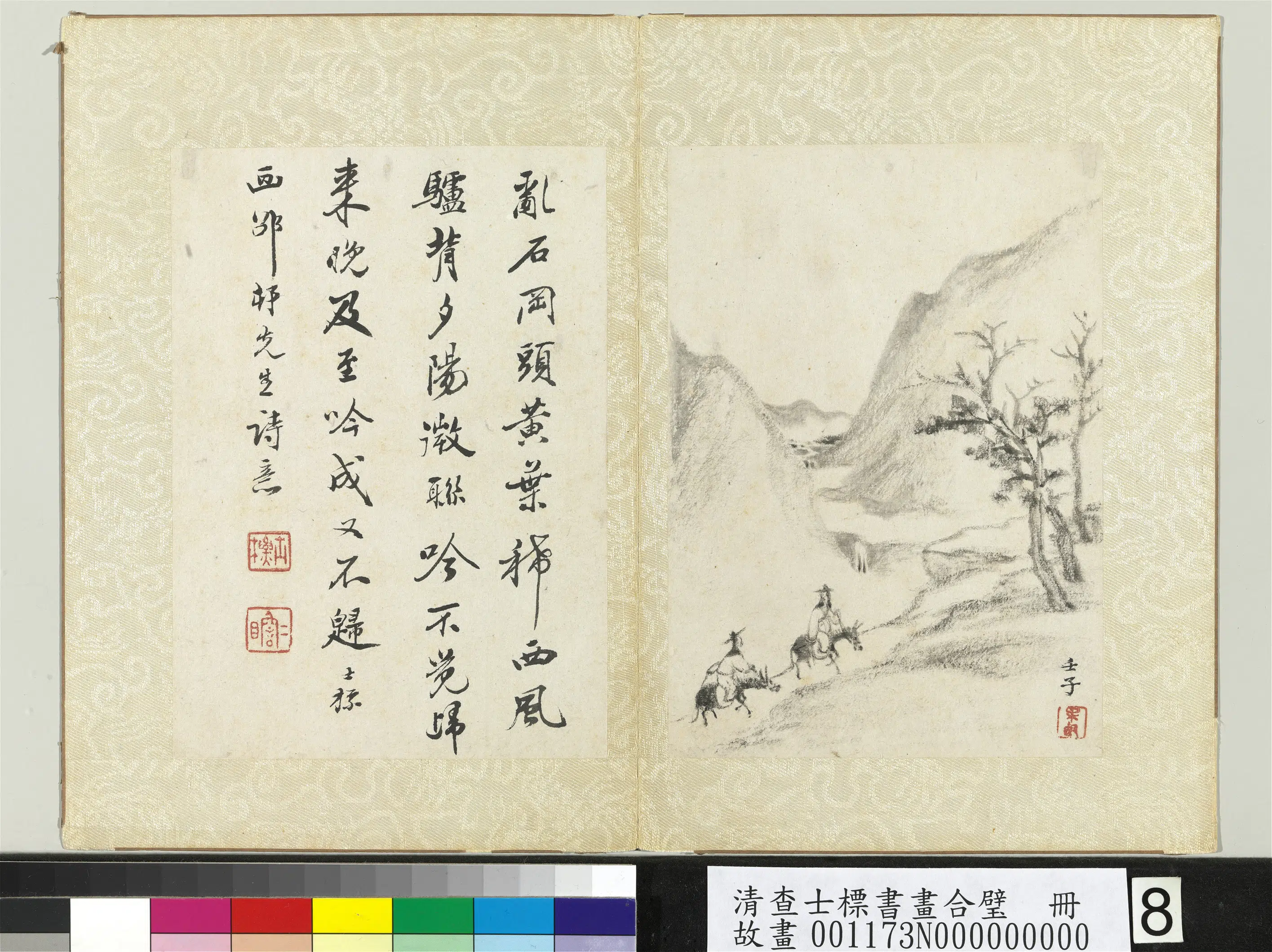
| 内容简介(中文) | 查士标(公元一六一五-一六九八年),字二瞻,号梅壑。安徽休宁人,流寓江苏扬州。明朝亡后,弃科举专事书画。家中收藏古器物、宋元书画颇丰,并精鉴别。书学米芾,却似董其昌;画初学倪瓒,后参吴镇。文人画当道,以诗画呈现,本册所见,画中景致,正如诗文所描述。看画读诗,诗引画意,画呈诗境,倍觉一股出尘不染的意味。画中单用墨笔,且以枯墨为多,画景正与后世评其画之「用笔不多,丰神荒寒」侔合。书法学董其昌,行间笔调清雅,与画中情境颇为相称。 |
| 内容简介(英文) | Album of Painting and Calligraphy Cha Shih-piao (1615-1698) Ch’ing Dynasty Cha Shih-piao (style name Erh-chan and sobriquet Mei-huo) was a native of Hsiu-ning, Anhwei, who resided in Yangchow, Kiangsu. After the fall of the Ming dynasty in 1644, he gave up hope of passing the civil service examinations and focused on painting and calligraphy instead. His family had a rich collection of antiquities, including Sung and Yuan painting and calligraphy, which he studied to cultivate his connoisseurship skills. In calligraphy, he studied the style of Mi Fu (1052-1107) to create a manner similar to that of Tung Ch’i-ch’ang (1555-1636). In his early paintings, he followed the style of Ni Tsan (1301-1374), later studying that of Wu Chen (1280-1354). In the scholar painting of Cha Shih-piao’s time, both painting and poetry were often combined together, as seen in this album. The paintings here depict marvelous scenery, just as described in the poetry and prose. Viewing the paintings and reading the poems, they complement and enhance each other’s qualities to cultivate an atmosphere of unspoiled refinement and elegant purity. Only ink was used in these paintings, often appearing slightly dry and scorched. These landscapes fit later descriptions of his paintings as having “Limited brushwork and a desolate atmosphere.” The style of the calligraphy here follows in the tradition of Tung Ch’i-ch’ang (1555-1636) with the brushwork and spacing being rhythmic and elegant. Here, they form an ideal complement to the painting. |
