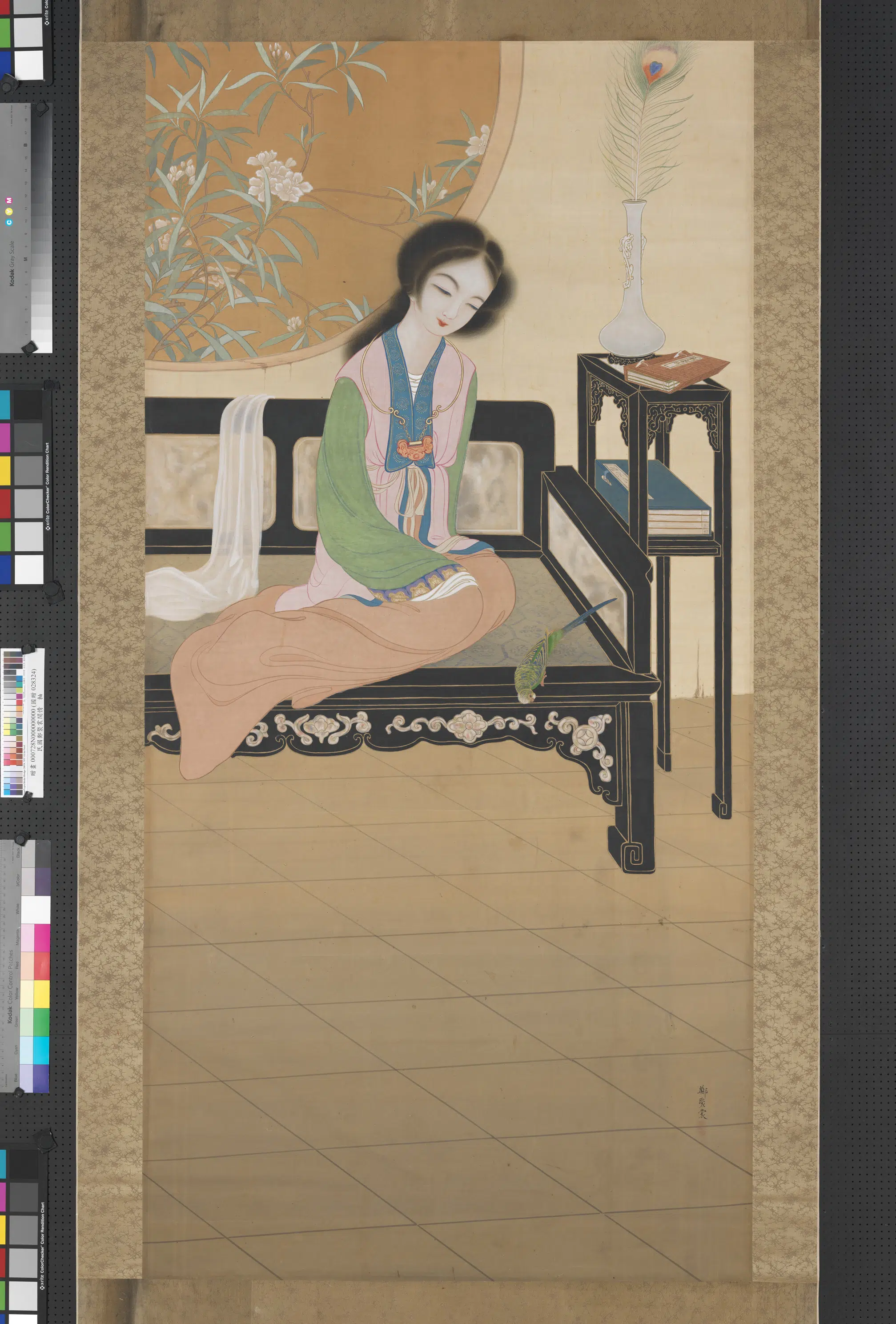
| 内容简介(英文) | Cheng Chiung-ch'ang, a native of Kwangtung, studied painting as a youth in Japan and his works were chosen for the imperial Tokyo exhibit. After returning to China, he focused on art education and established the Peking Academy of Fine Arts, serving as its president. He also worked for the palace collection, catching a glimpse of the ancient works there. During the Sino-Japanese War, he moved to Macao and remained there for the rest of his life. Before the War, he took part in the popular education movement, participating in local projects for the benefit of others. He specialized in figure painting, combining the techniques of Chinese and Japanese art. He also excelled at painting traditional ladies, reflecting on their elegance and beauty. His works were usually quite large. This is a graduation work done by Cheng Chiung-ch’ang while he was studying in Kyoto. He shows a young elegant lady in traditional dress seated on an opulently decorated day bed looking down pensively at a parrot. Since a parrot can mimic the human voice, it is known as a “mediumship”. They are often found in traditional paintings of ladies. The graceful pose of the lady complements elegance and status. The furniture and peacock feather in the vase represent an atmosphere of luxury, while books add an element of sophistication. Outside the window, flowers vie for beauty. The painting was done with exceptional finesse and detail, as shown in the decoration of the bed and table as well as the white gauze so thin as to appear almost transparent. From the depiction of perspective for the furniture and the floor, the artist was obviously trained in Western techniques. However, the highly decorative elements and the rendering of the lady's hair are close in keeping with Japanese painting techniques. This work was donated to the National Palace Museum by Ms. Cheng Mei-ch'eng. |