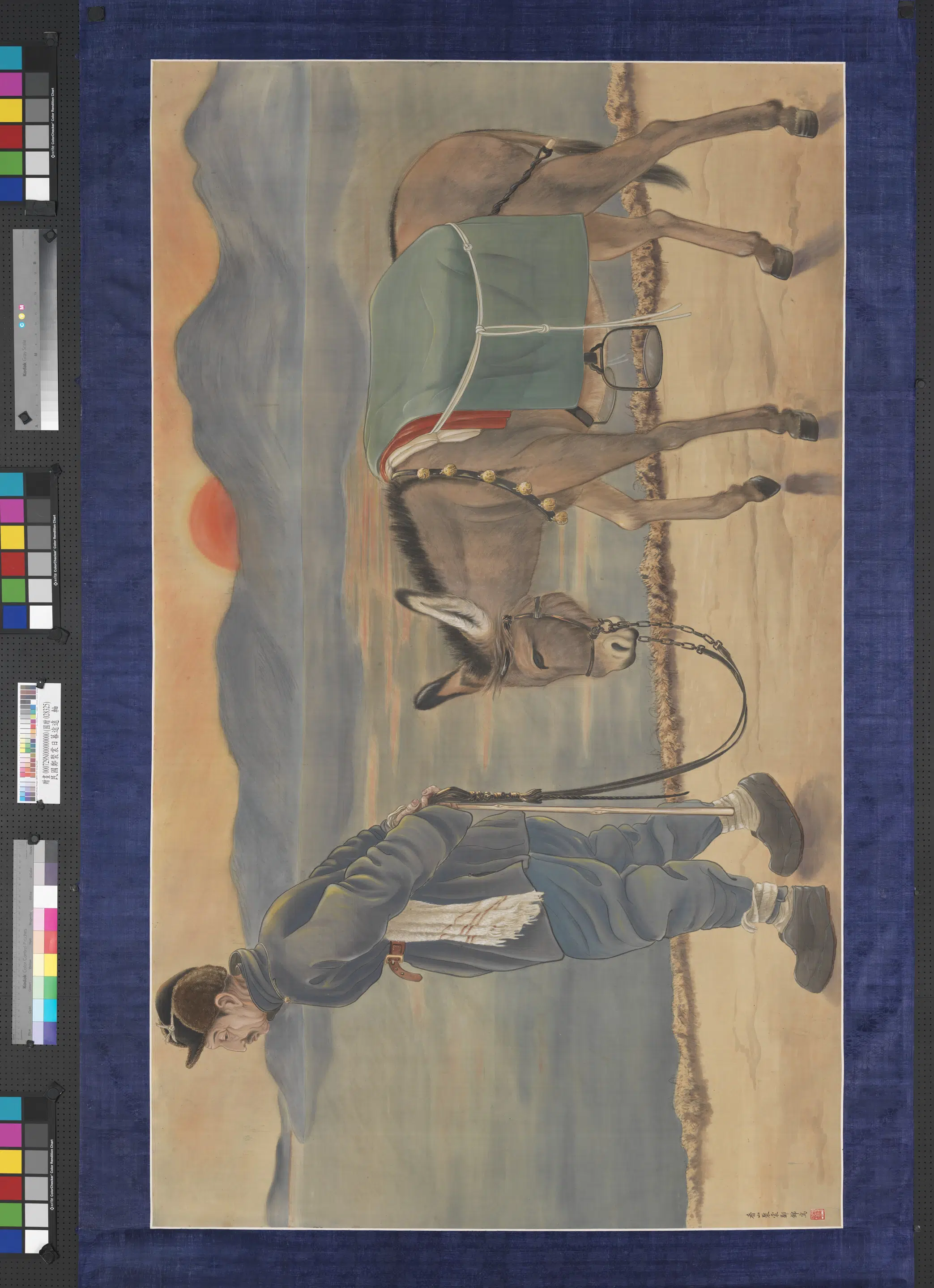
| 内容简介(英文) | Cheng Chiung-ch'ang, a native of Kwangtung, studied painting as a youth in Japan and his works were chosen for the imperial Tokyo exhibit. After returning to China, he focused on art education and established the Peking Academy of Fine Arts, serving as its president. He also worked for the palace collection, catching a glimpse of the ancient works there. During the Sino-Japanese War, he moved to Macao and remained there for the rest of his life. Before the War, he took part in the popular education movement, participating in local projects for the benefit of others. He specialized in figure painting, combining the techniques of Chinese and Japanese art. He also excelled at painting traditional ladies, reflecting on their elegance and beauty. His works were usually quite large. In a desolate scene with a setting sun in the background, a haggard old man who has obviously gone through a great deal of hardship leads a weary mule with a slow yet steady pace. The strong shading and greyish tint adds to the sense of a long and dreary winter. This work was done during the Sino-Japanese War and reflects the plight of people and China at the time. This work was donated to the National Palace Museum by Ms. Cheng Mei-ch'eng. |